Foreigners confronted with traditional Chinese architecture for the first time are perhaps most impressed by the broad sweeping roofs, which are supported by pillars within the building rather than the walls. The curve of the roofs, which starts from the ridge and turns up at the eaves, gives Chinese buildings a light and airy atmosphere without sacrificing a feeling of power and majesty. The "flying eaves," as they are called, are often accentuated with gold and green enamel tiles, which seem to make them shimmer against a blue sky.
Foreign scholars have come up with a number of explanations as to the origin of these eye-catching curves. Some say they are derived from the roofs of tents used when the Chinese were a nomadic people roaming the Steppes of Central Asia. Others say they are based on the shape of a fir tree growing in the Himalayas, where the Chinese also once lived. A simpler explanation is that curves simply appeal to the Chinese sense of aesthetics. And, at the practical level, the curves may have been designed to give better drainage during the heavy rains which frequently occurred in the valley of the Yellow River.
Chinese scholars tend to believe that the curves were a natural result of building in wood. Because logs come in different sizes, they are more easily adapted to a curved configuration. But whatever the explanation, the result is a source of enjoyment and wonder today.
The flying eaves seem to give structures a liveliness and grace resembling the finest calligraphy, and bring the building out of the world of man into the realm of the gods. Traditional Chinese architecture therefore symbolizes the Chinese concept of uniting man and heaven.
There are four major traditional roof designs. The "wutun roof" consists of a main ridge with four minor ridges sloping away from it. The "hard mountain roof" slopes away from the front and rear and has gables at either end formed by the walls called "mountain walls." The "hanging mountain roof" is similar, but has lateral eaves overhanging the gables. The hanging mountain roof often rests on top of the wutun roof, uniting the main ridge with eight other minor ridges, to form a "nine-ridge roof" also known as the "resting mountain roof." The "rolled tent" roof slopes away on either side, and has no obvious ridge.
Because they were made of wood, traditional Chinese structures are seldom more than 1,000 years old. Thus, scholars have to rely on books and other written records to reconstruct the earliest period of Chinese architecture. Research shows that the wutun roof and flying eaves existed as early as the Chou Dynasty, with other styles being added during the Han.
Examples of Tang Dynasty architecture can still be found, such as the Fokuang temple in Shansi. Since the Japanese derived their architectural styles from the Tang, a study of their buildings also provides historical evidence.
By the Sung Dynasty, the first handbook for architects had been issued, and drawings from this period are also abundant. The Ching Ming Scroll, portraying Sung Kaifeng, shows a preponderance of mountain roofs.
During the Ming and Ching Dynasties, rules on roof styles were strictly enforced, with the wutun holding the highest position, followed by the resting mountain, hanging and hard mountain styles. Ordinary citizens were not allowed to use the wutun and resting mountain styles at all.
Roof decorations also had a significant role, since they were not only beautiful, but also had symbolic meaning. From earliest times, the Chinese decorated their roofs with animal figures, and one of the oldest, an "owl's tail," appeared in the Han Dynasty. Whales were also popular because they could spout water, and therefore, put out fires, and fish and dragons featured prominently for their associations with water also. Other auspicious figures were the eight immortals, phoenixes, lions and the mythical Chinese beast, the chilin.
Another important element of roof architecture is the enameled tiling. During the Wei Dynasty, when the first reference to them appeared, the tiles were used only as palace ornaments. But in the Sui Dynasty, their use spread and different colors were employed to represent different social classes. Yellow tiles were reserved for the imperial palace, green for princes and other members of the imperial family, blue for the nobility, and ordinary clay for the populace. During the Ming Dynasty, these rules were enforced even more strictly.
Beautiful curves, abundant ornaments, and lustrous tiles are the principal characteristics of Chinese roof architecture. Taiwan's traditional architecture is a branch of the southern Chinese style, brought over from the mainland by immigrants from the Minnan region of Fukien Province. Although Taiwan lacks any palaces or fortresses, its architecture incorporates many of the traditional elements found all over China.
Most of the roofs found on dwellings in Taiwan are in hard mountain style. This style can be divided into two types, horseback and swallowtail. The horseback is found on the homes of ordinary people, and is in simple hard mountain style. The swallowtail, on the other hand, has sweeping eaves, and is limited to official dwellings and temples.
Roof ridges have been decorated with all the traditional designs, including dragons, gourds, phoenixes, fish, and tigers. Mountain walls are decorated with such simple designs as flags, spears, shields and fish, often symbolizing the community or the family.
In this modern age of overcrowded cities, many traditional elements of Chinese architecture are disappearing. Wood has given way to concrete, gardens to apartment blocks. Yet still the beauty of the Chinese roof remains. Although Taipei's Grand Hotel and the Chiang Kai-shek International Airport are constructed of concrete, they are topped by traditional style roofs.
[Picture Caption]
1. Most traditional Taiwanese homes employ the hard mountain roof and a modicum of decoration. 2. The "owl tail" was modified in Southern Chinese architecture to become the swallowtail, and was limited to the homes of officials. 3,4,5. Chinese traditional philosophy regarding the five elements and yin-yang has been incorporated into the architecture. Photo 3 shows a house designed about the metal element, 4 around wood, and 5 around earth.
1. Many rural homes incorporate ceramic jars into the design of the mountain wall. 2. A house incorporating the fire element. 3. Modern glistening tiles are also used in the design of the mountain wall. 4. A water element home. 5. The scrolls and fungus are auspicious symbols. 6. This style roof design was first developed during the Han Dynasty, 2,000 years ago. The circular ceramic pieces contain a stylized "longevity" character. 7. Temple artisan at work. 8. A temple in Kinmen.
1. A heavy eave roof on the mainland. 2. The main ridge of a temple roof. 3. The five main types of roof designs. 4. The combination roof, a hard mountain roof joined to another hard mountain roof. This style is common in Taiwan.
1. Three deities symbolizing fortune, position, and longevity are often found on Taoist temples. 2,3. "Two dragons worshipping the pagoda" and "two dragons contesting the pearl" are two Buddhist temple images. 4. The "reverse hook Tang grass eave".
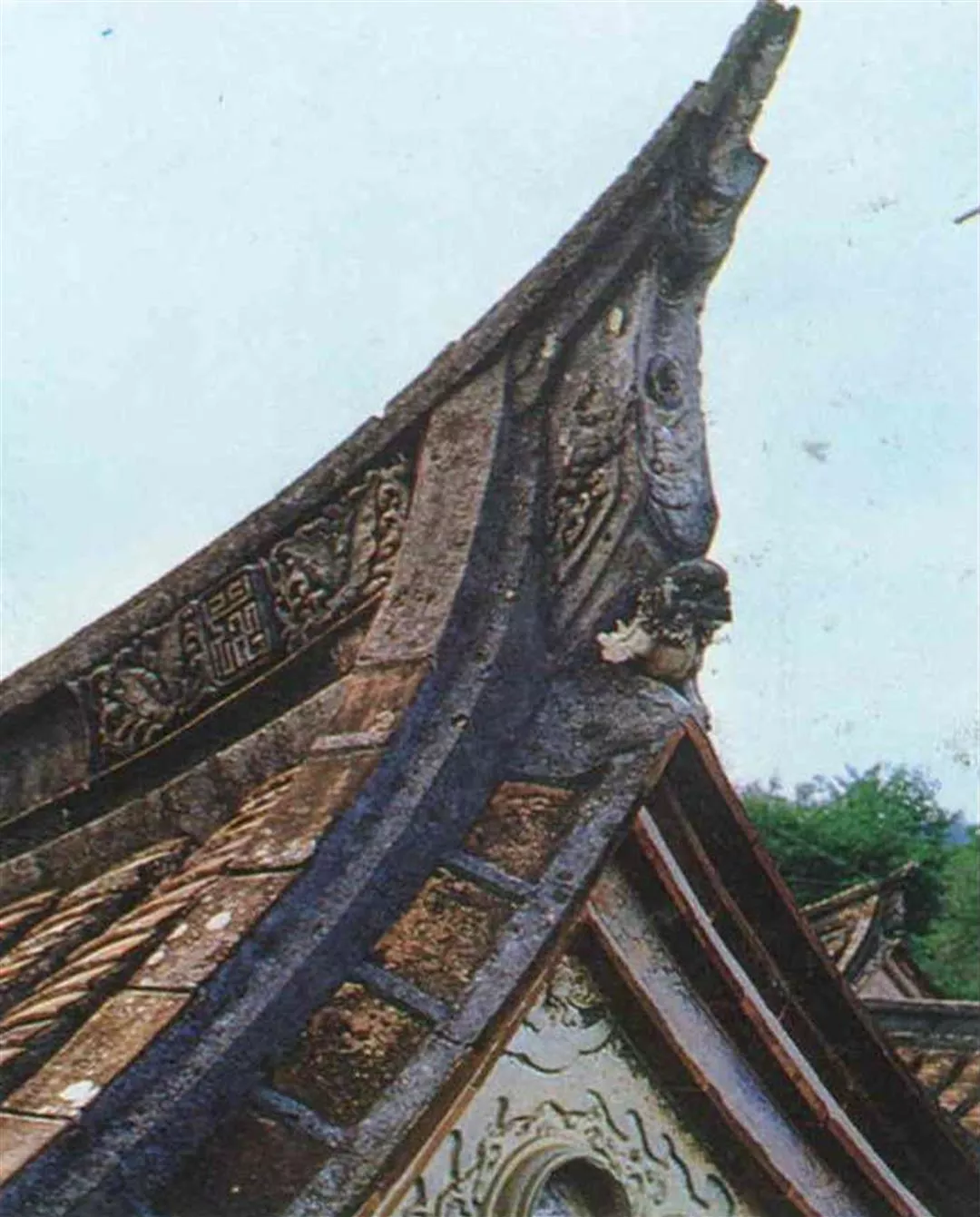
2. The "owl tail" was modified in Southern Chinese architecture to become the swallowtail, and was limited to the homes of officials.
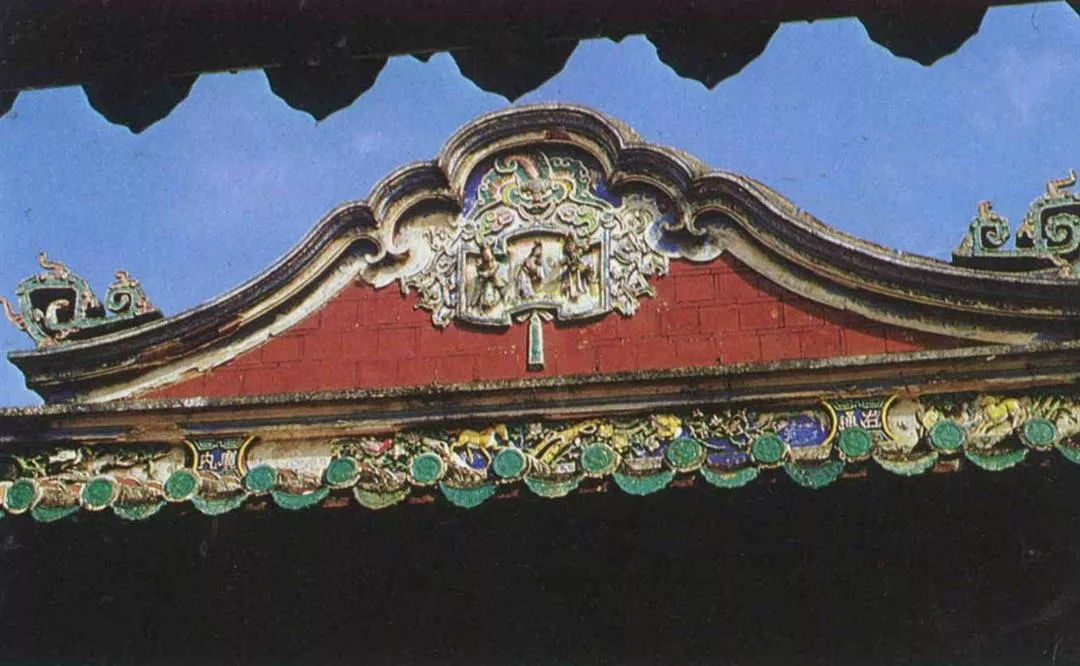
3,4,5. Chinese traditional philosophy regarding the five elements and yin-yang has been incorporated into the architecture. Photo 3 shows a house designed about the metal elemen.
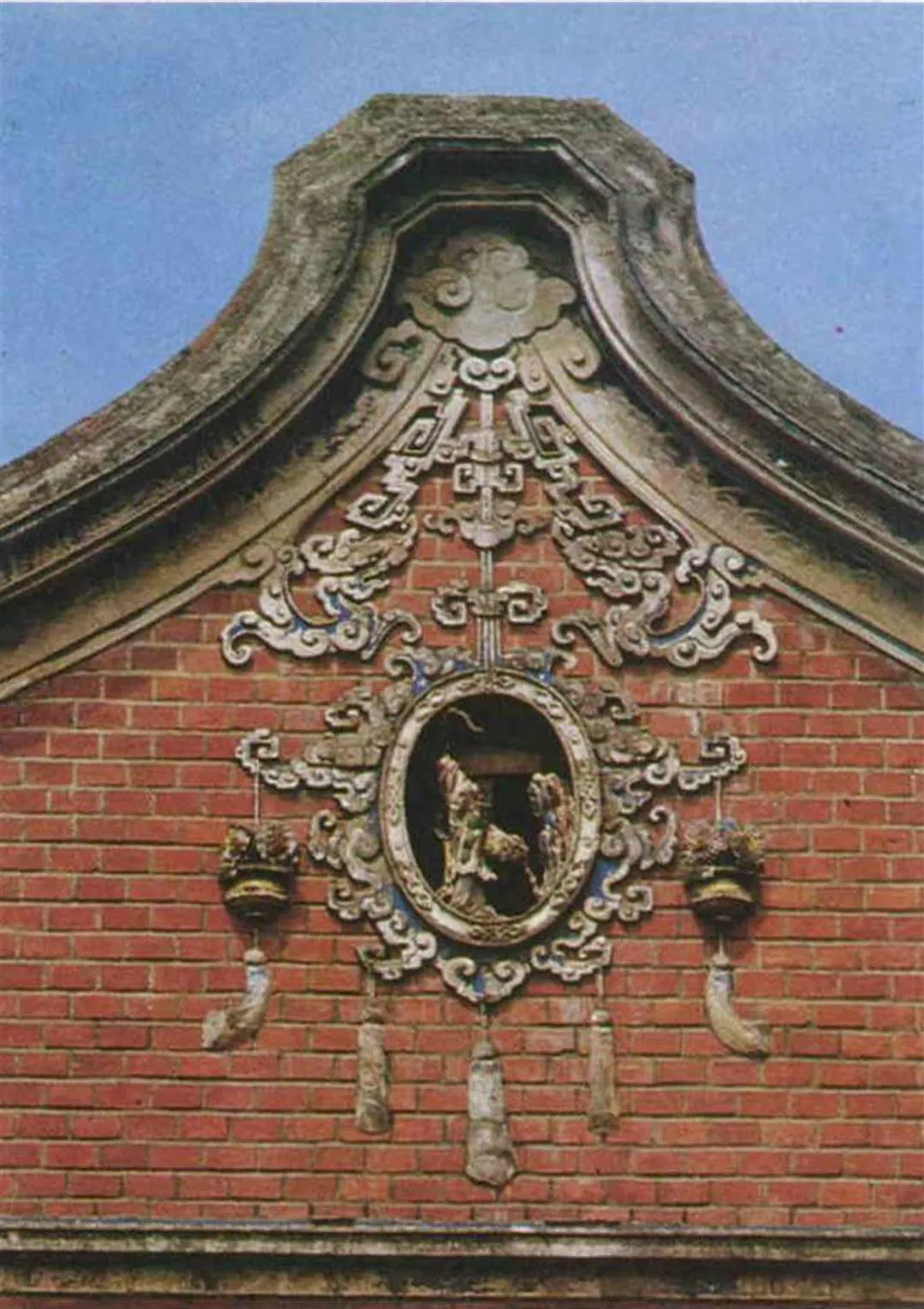
4 around wood, and 5 around earth.
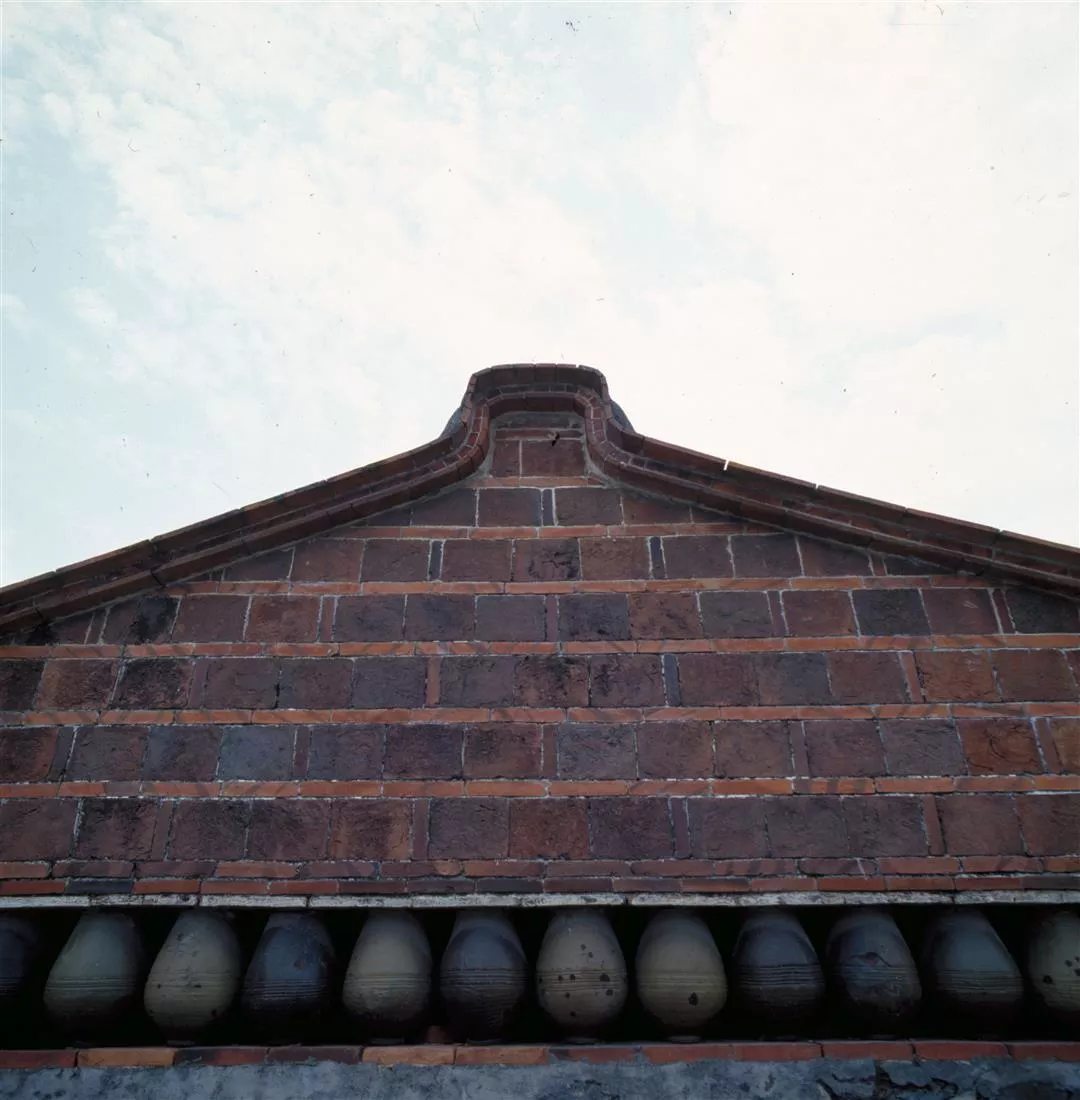
1. Many rural homes incorporate ceramic jars into the design of the mountain wall.
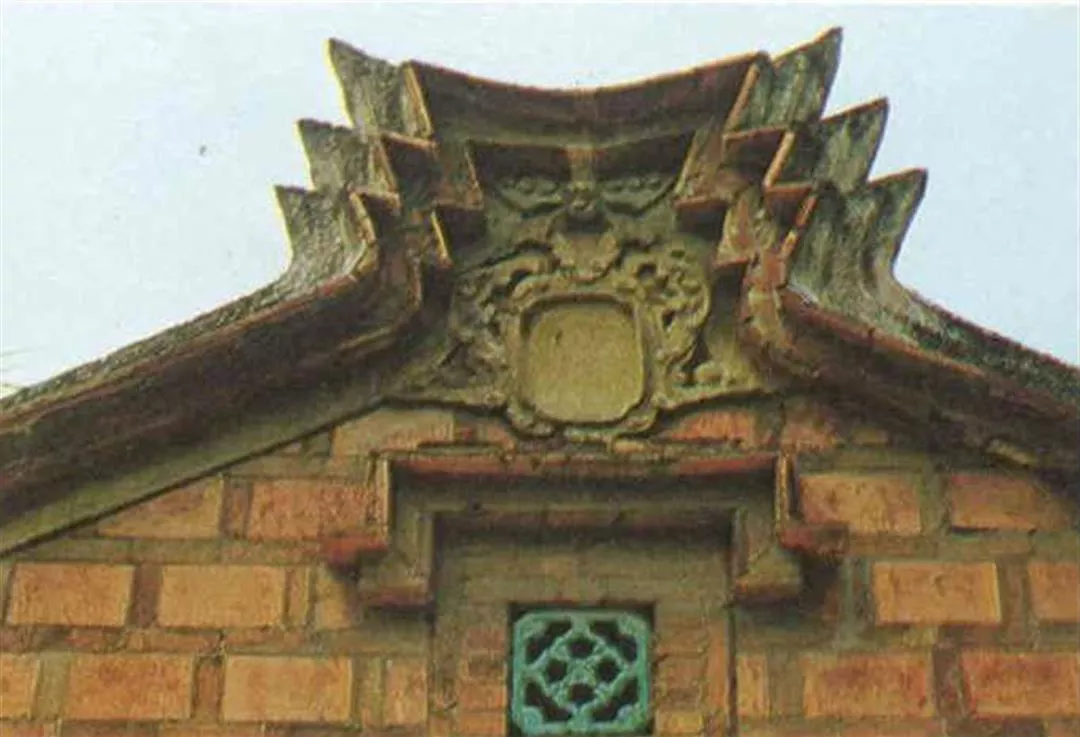
2. A house incorporating the fire element.
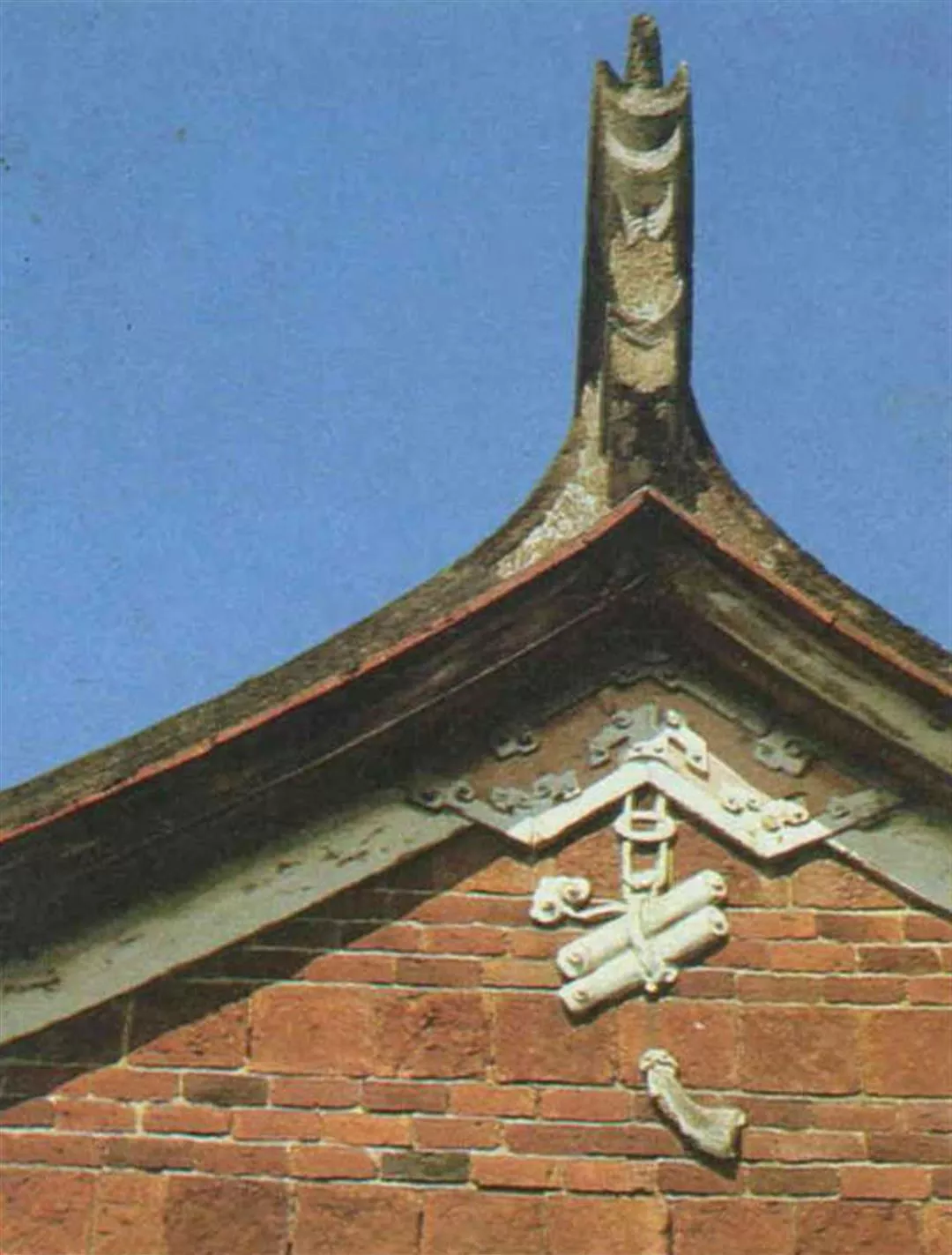
5. The scrolls and fungus are auspicious symbols.
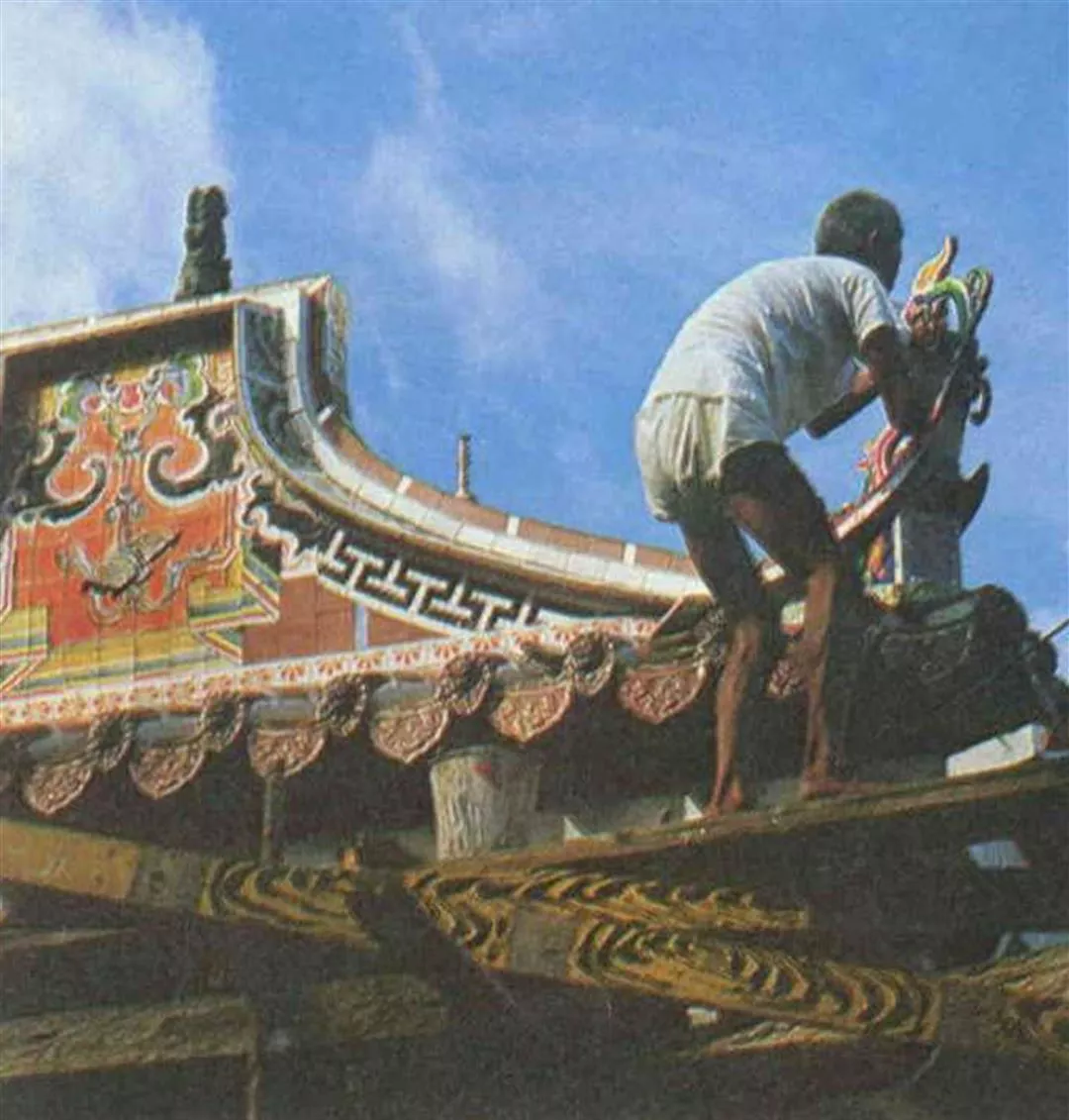
7. Temple artisan at work.
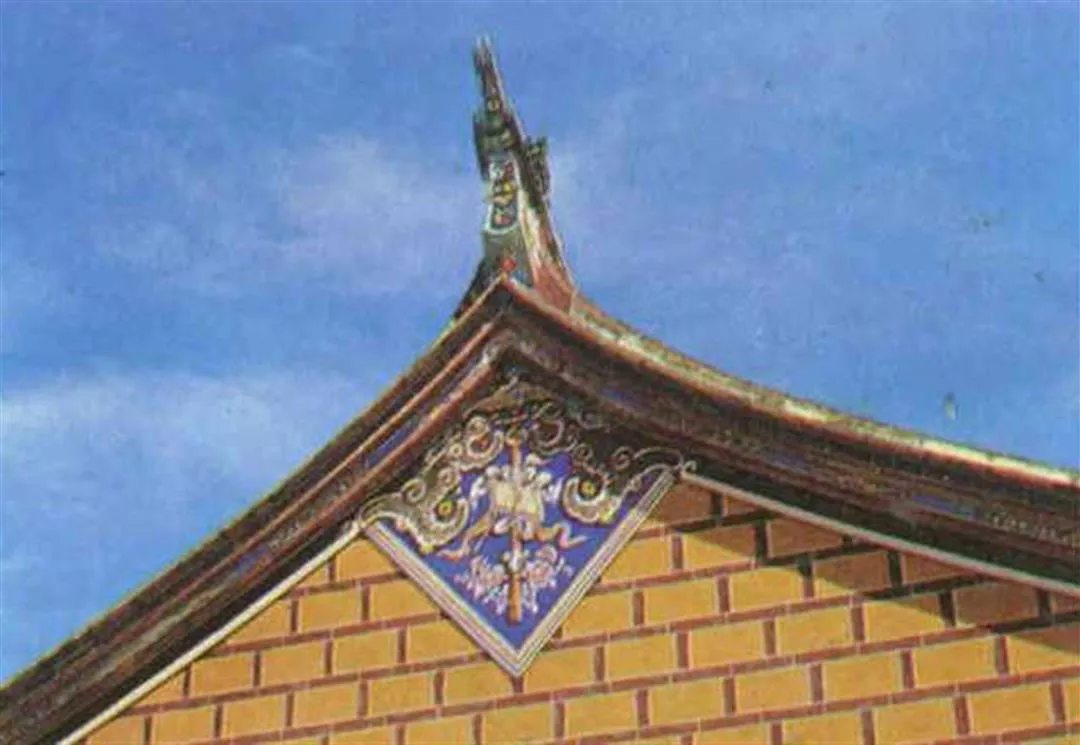
3. Modern glistening tiles are also used in the design of the mountain wall.
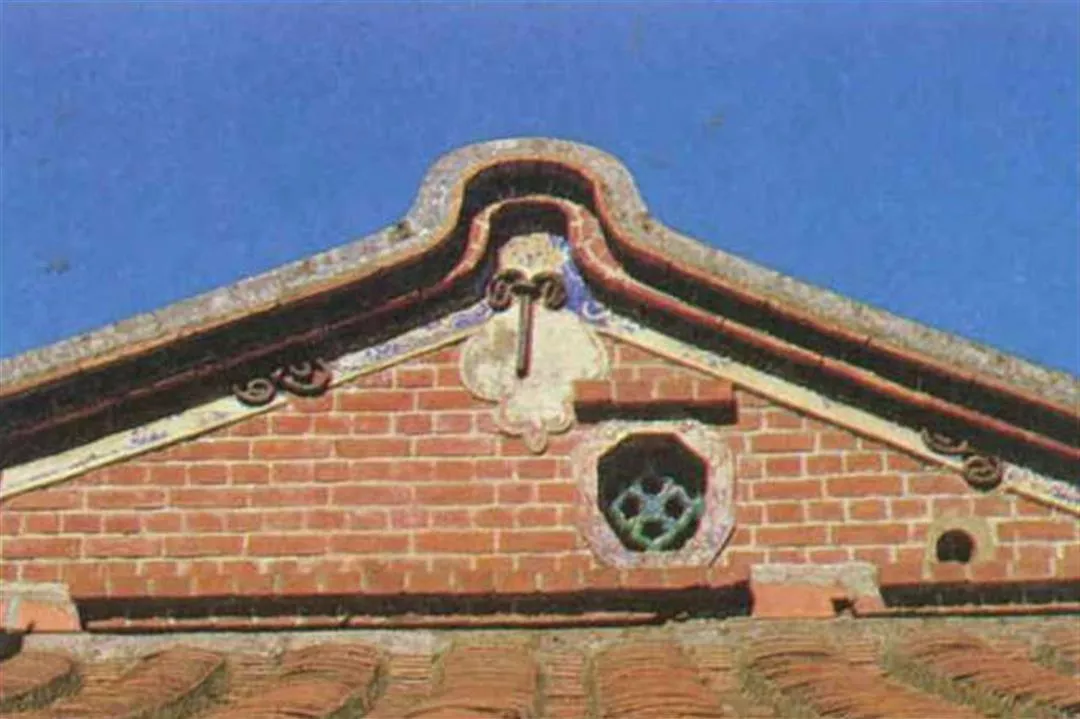
4. A water element home.
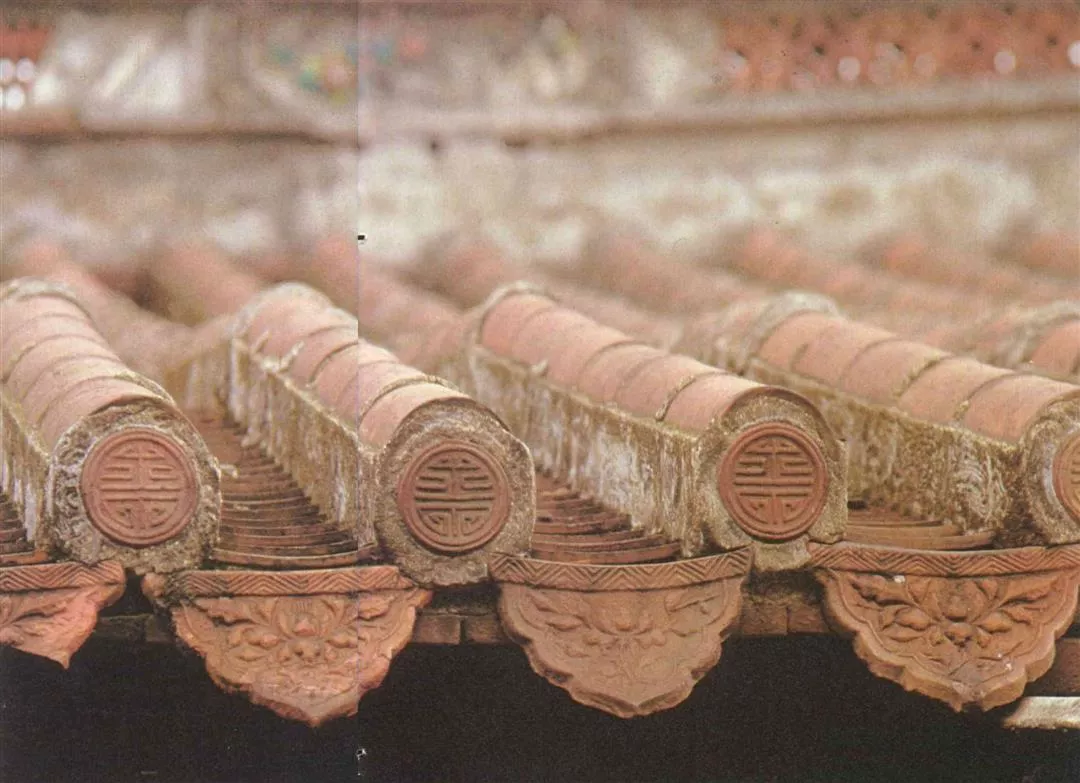
6. This style roof design was first developed during the Han Dynasty, 2,000 years ago. The circular ceramic pieces contain a stylized "longevity" character.
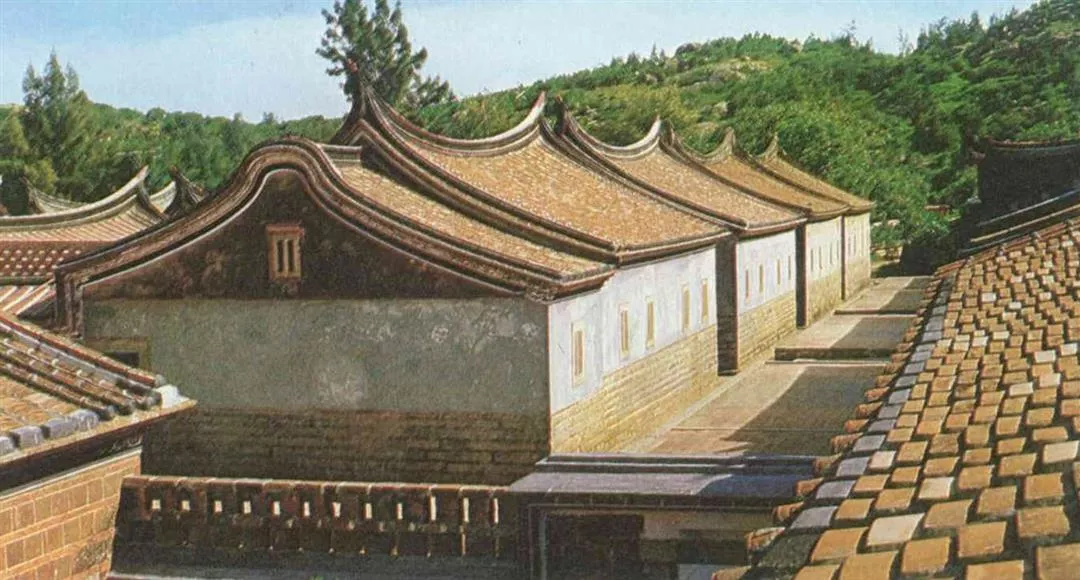
8. A temple in Kinmen.
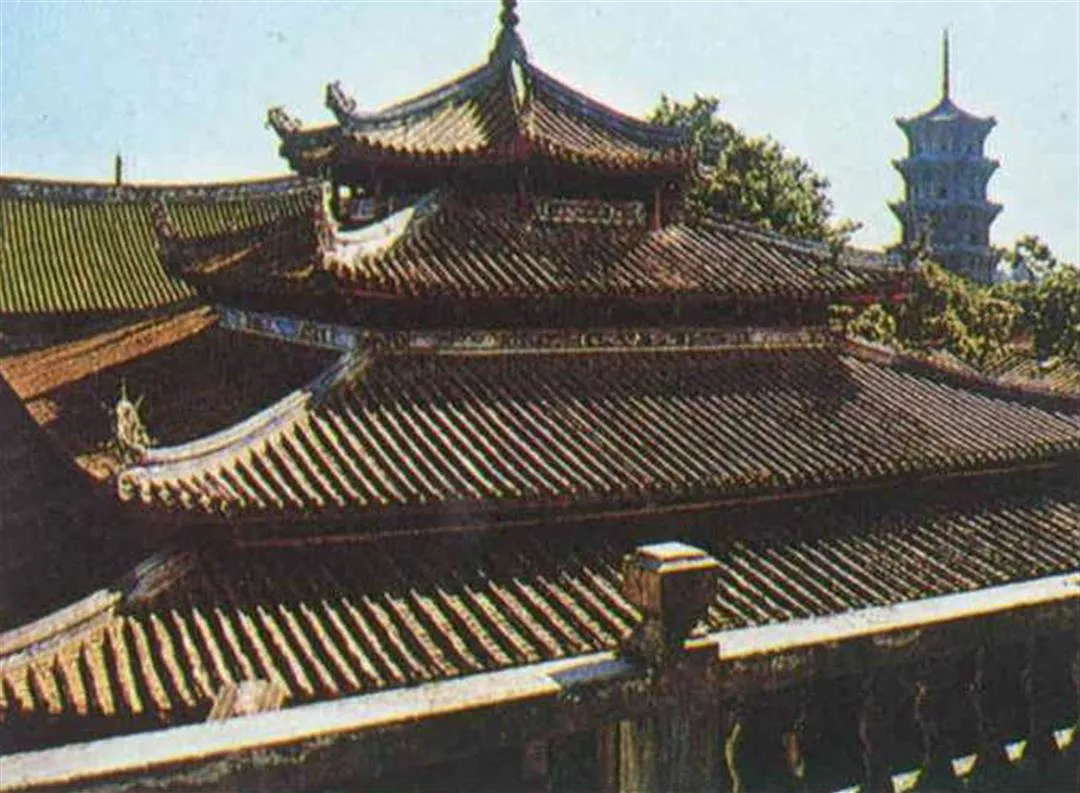
1. A heavy eave roof on the mainland.
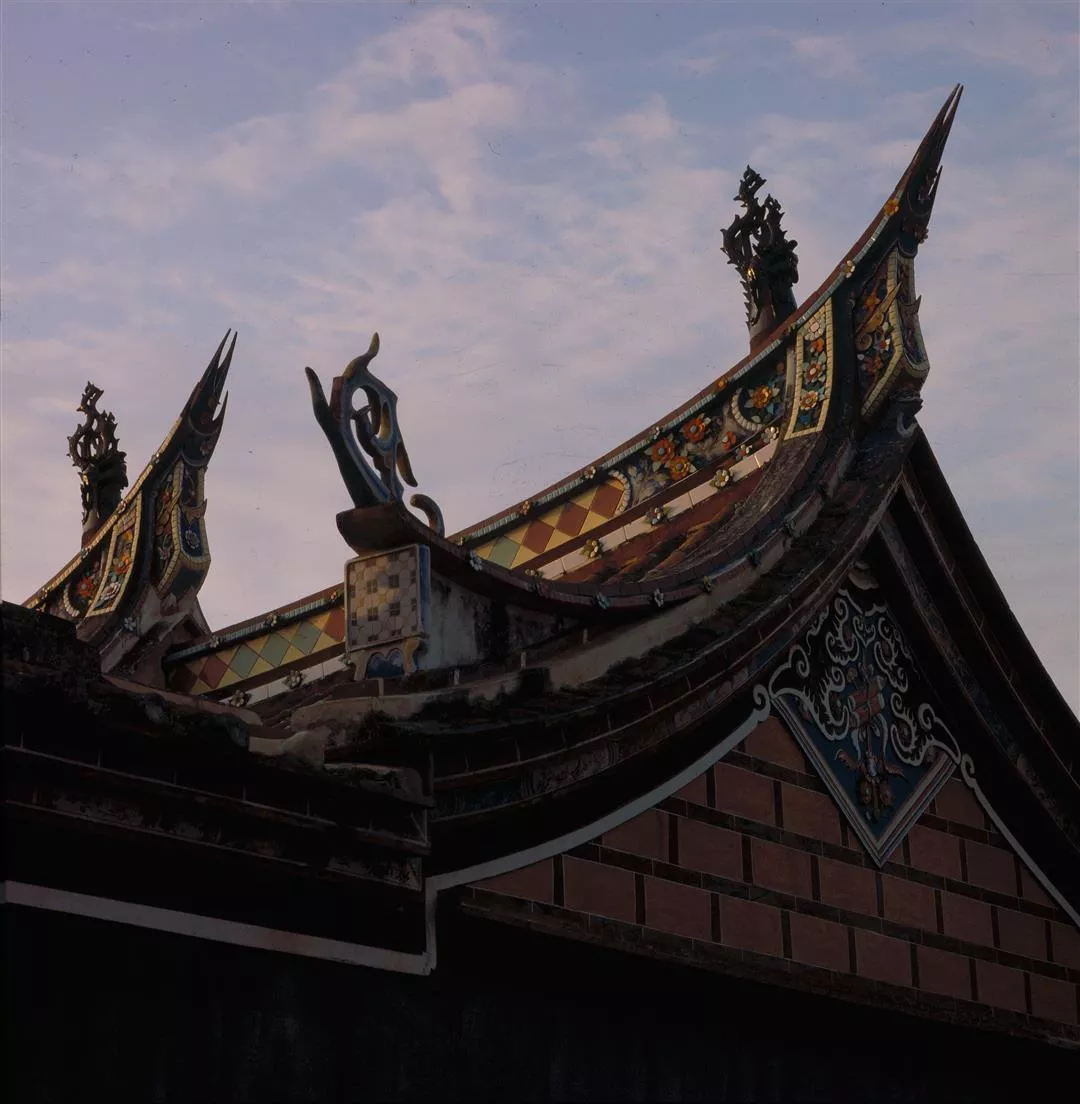
2. The main ridge of a temple roof.
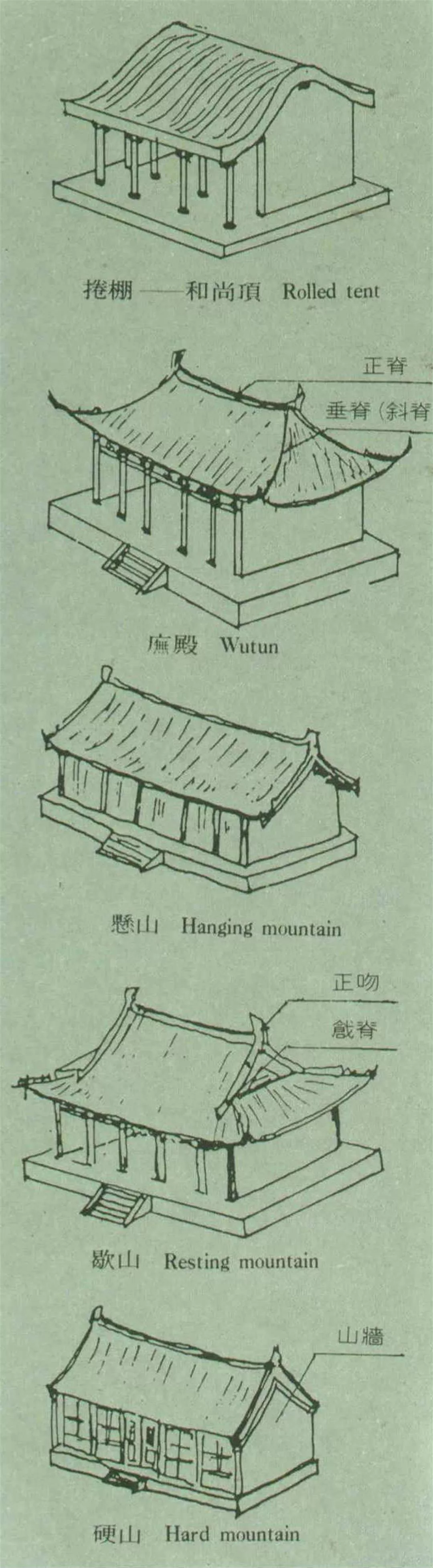
3. The five main types of roof designs.
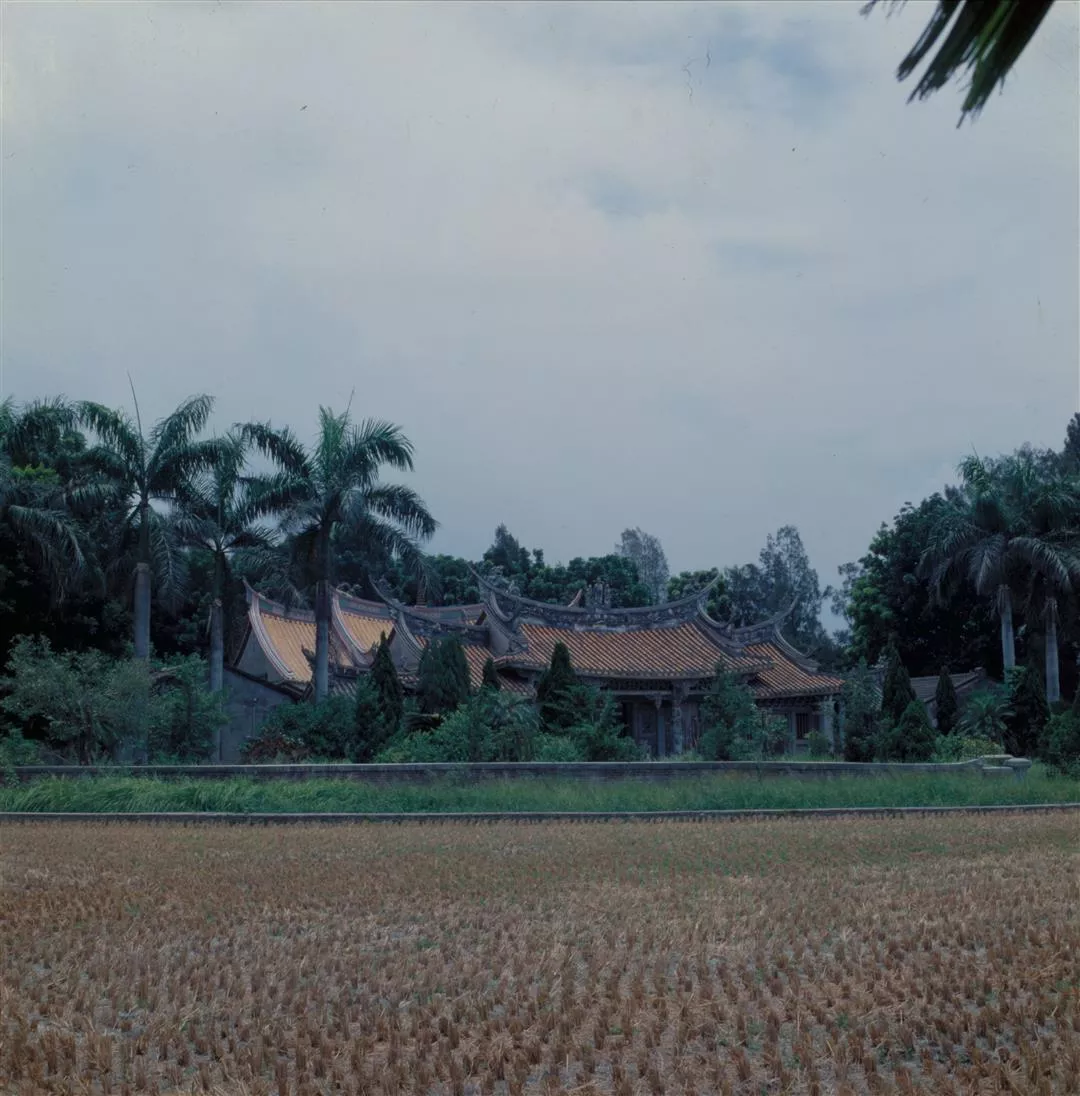
4. The combination roof, a hard mountain roof joined to another hard mountain roof. This style is common in Taiwan.
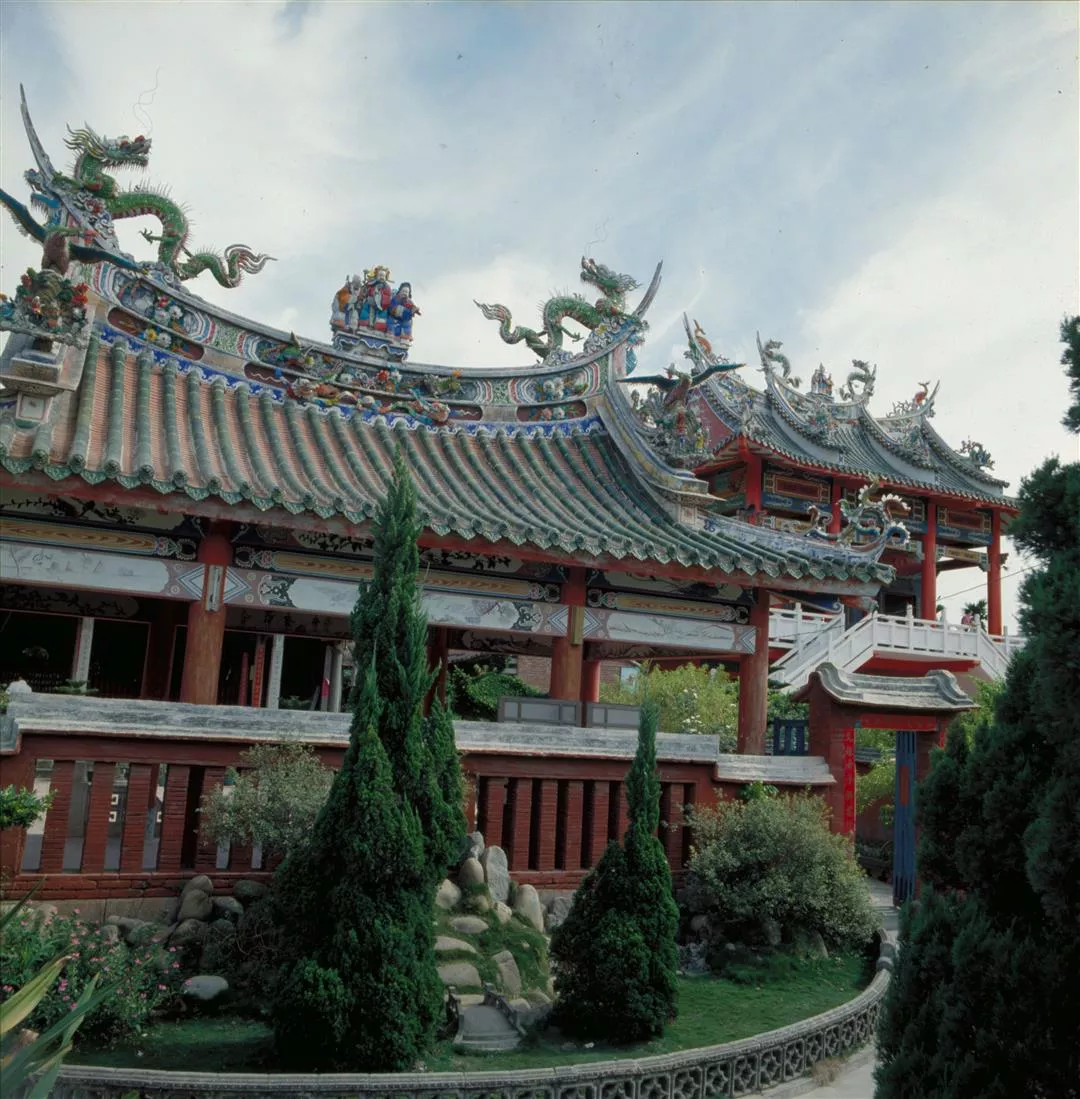
1. Three deities symbolizing fortune, position, and longevity are often found on Taoist temples.
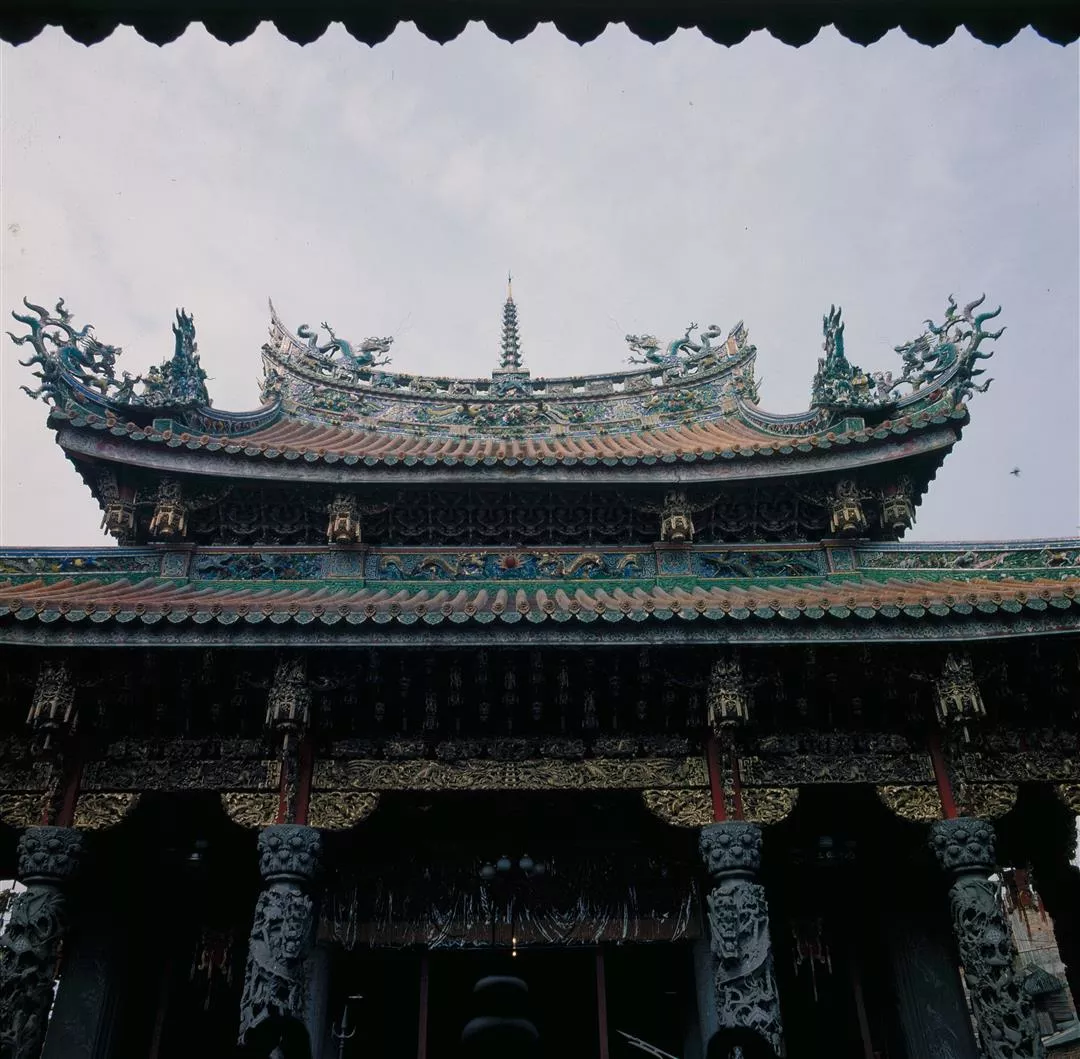
2,3. "Two dragons worshipping the pagoda" and "two dragons contesting the pearl" are two Buddhist temple images.
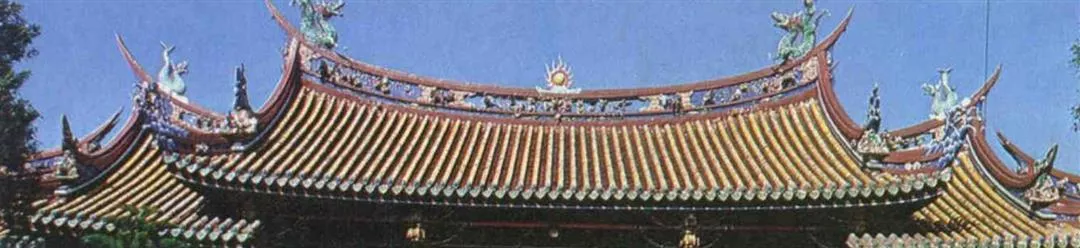
2,3. "Two dragons worshipping the pagoda" and "two dragons contesting the pearl" are two Buddhist temple images.
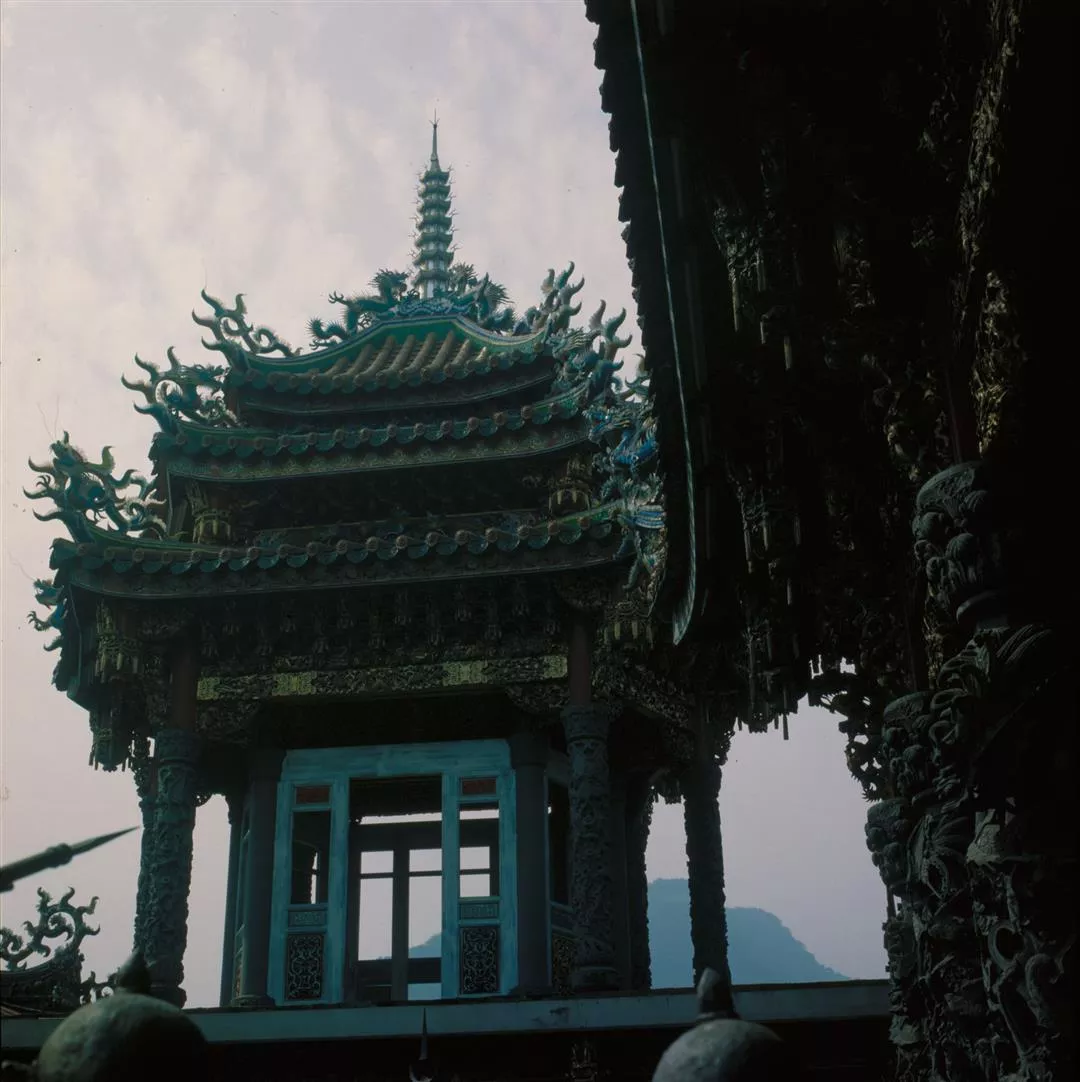
4. The "reverse hook Tang grass eave".


@List.jpg?w=522&h=410&mode=crop&format=webp&quality=80)


@List.jpg?w=522&h=410&mode=crop&format=webp&quality=80)