Situated at the tectonic boundary of the Eurasian continental plate and the Philippine oceanic plate, Taiwan has the highest mountain peak in Northeast Asia and a complex topography that provides endless fascination to scholars from all around the world.
The Forestry Bureau recently held a vote to let the public select “the top ten landscapes” in Taiwan. The idea was to promote landscape preservation in much the same way as the United Nations Educational, Scientific and Cultural Organization (UNESCO) is doing. The vote attracted 210,000 participants, and the fantastic rock formations of Yeliu emerged as the top choice of both experts and the general public, primarily on the strength of the world-renowned Queen’s Head rock. Some of the other sites on the list were Yushan, Sun Moon Lake, Jinguashi, Guishan Island, and Moon World.
The term “landscape” is a general reference to all the scenes that we see about ourselves on the surface of the earth. The lay of the land, animal and plant life, and the varied effects of human activity all constitute landscape elements.
Landscapes are generally rare, immovable, and cannot be regenerated, so once a landscape has been damaged, it can never be returned to its original state. Countries everywhere have been taking action in recent years to preserve landscapes so that future generations can enjoy them.

Top Ten Landscapes in Taiwan/source: Forestry Bureau_5. Guishan Island (photo by Chen Minming, courtesy of the Northeast and Yilan Coast National Scenic Area Administration).
Taiwan is located in a young orogenic (mountain-building) belt, where tectonic movement causes frequent earthquakes and thrusts the earth’s crust upward. In terms of climate, the boundary separating the tropics from the subtropics passes right though the island, which has pronounced monsoon winds, high temperatures, high humidity, and a lot of rainfall. Rivers are a potent force for erosion and transport of rock. This complex set of natural conditions has sculpted Taiwan into a veritable earth sciences museum with an incredible variety of natural landscapes.
As a living display case of landscapes, Taiwan has naturally been involved in the international landscape preservation movement of recent years. The Council of Agriculture’s Forestry Bureau hired a group of experts in 2009 to survey landscapes throughout Taiwan, and over the ensuing four years they have registered 341 landscape preservation sites with unique value. In mid-August this year, the bureau launched a campaign to select “the top ten landscapes in Taiwan” and “the top landscapes in each county, provincial city, and special municipality.” The selections were made by the public and experts via a vote.
After two months of careful evaluations, a list of “ten landscapes for every Taiwanese person’s bucket list” was publicly released. The top spot went to Queen’s Head rock in Yeliu.

Top Ten Landscapes in Taiwan/source: Forestry Bureau_10. Dabajian and Xiaobajian Mountains (courtesy of the Forestry Bureau).
Spots two through ten on the list belong to the main peak of Yushan (Jade Mountain), Sun Moon Lake, Jinguashi, Guishan Island, the mudstone badlands of Moon World in Kaohsiung, the cirque valley on Snow Mountain, Qingshui Cliff, Huoyan Mountain Nature Reserve, and the Dabajian and Xiaobajian Mountains.
The selection process was chaired by Lin Jiun-chuan, a professor with the Department of Geography at National Taiwan University. He notes that the general public tended to prefer famous landmarks and tourist areas such as Yeliu, Yushan, Sun Moon Lake, and Jinguashi. The experts, in contrast, placed greater stress on uniqueness, diversity, and scientific research value. Their number-two choice, for example, was the Liji badlands of Taitung, which most people are not familiar with.
The Liji badlands, notes Lin, are deposits of unstratified mudstone. They originate at the subduction zone where the Eurasian continental plate collides with the Philippine oceanic plate, forcing mud and minerals from the sea floor up to the earth’s surface. These badlands are an important research site for geologists from around the world who study the collision of oceanic and continental tectonic plates. “There are only two places in the world where these same conditions exist,” says Lin, noting that the other is in Papua New Guinea.
But despite the differing preferences, Deputy Director-General Yang Hung-chih of the Forestry Bureau feels that, to be treated as one of Taiwan’s ten best landscapes, a site must be the choice of a majority of the people. And popular support depends on people having actually been to a particular place. Yushan, for example, is much less accessible than Yeliu, and thus a bit less popular.

Top Ten Landscapes in Taiwan/source: Forestry Bureau_6. Moon World badlands in Kaohsiung (photo by Wu Yufeng, courtesy of the Tourism Bureau).
However, Yeliu won the top spot not just because of its many visitors and aesthetic beauty.
Lin explains that Yeliu is a classic example of an erosional coastal landform. Its best-known feature is the Queen’s Head mushroom rock. Although the head is now in danger of falling off due to continued erosion, it certainly meets the selection criteria of being “rare,” “impossible to regenerate,” and “clearly delicate.” For these reasons, the experts also picked Yeliu as Taiwan’s top landscape.
The main peak of Yushan, at number two on the list, towers 3952 meters above sea level, making it the tallest mountain in Northeast Asia. Sun Moon Lake, another site that scored high thanks to its tourist appeal, attracts over 8 million visits per year and finished third in the voting.
Other sites on the list that combine scientific and touristic value include: Jinguashi (4th), once the biggest gold producing area in East Asia; Guishan Island (5th), the youngest volcano in Taiwan, and the only one that is sure to erupt again; and Qingshui Cliff (8th), which features a rare near-vertical rock face.
The cirque valley on Snow Mountain (7th) is little known among the general public. A bowl-shaped valley on the northeast face of the mountain’s main peak, it provides proof that Taiwan was once home to glaciers, and is also Taiwan’s best known cirque landform. Dabajian and Xiaobajian Mountains (10th) are extremely difficult to climb, and are home to the oldest metasandstone in Taiwan. Jutting abruptly skyward with vertical cliffs on all sides, the two peaks make an imposing pair.

Sun Moon Lake, number three on the list of Taiwan’s top ten natural landscapes, is a basin lake that resulted from the process of mountain building. Beautification projects over the years have turned it into an absolute gem.
In addition to the top ten landscapes for Taiwan as a whole, voters also picked top landscapes from all 20 of Taiwan’s counties, provincial cities, and special municipalities, including the fishing port of Badouzi and Heping Island in Keelung City, Qixing Mountain in Taipei City (within Yangmingshan National Park), Kenting Forest Recreation Area in Pingtung County, and the columnar basalt pillars of Tongpan Islet in Penghu County.
Lin notes that Taiwan already has established several national parks, and in accordance with the Cultural Heritage Preservation Act has designated several nature preserves, which are good ways to prevent human activity from damaging precious landscapes. Of the ten top landscapes recently chosen, five are located in existing protected areas.
UNESCO in recent years has been aggressively promoting the concept of geoparks, which promise to become a key part of the landscape preservation effort in Taiwan.
A geopark is defined as a territory encompassing one or more sites of topographic or geological importance. About 100 landscapes have been registered as Global Geoparks Network (GGN) sites, including Jeju Island Geopark in South Korea, Huangshan Geopark in mainland China, Toya Caldera and Usu Volcano Geopark in Japan, Langkawi Geopark in Malaysia, and many other world-renowned travel destinations.
Taiwan cannot apply to have landscapes registered with the GGN because it has no seat at the United Nations, but Taiwan in recent years has managed to establish six geoparks (North Coast Geopark, Yanchao Badland Geopark, Mudstone Badlands Geopark, Caoling Geopark, Penghu Marine Geopark, and Matsu Geopark) thanks to the combined efforts of the Forestry Bureau, the Tourism Bureau, local governments, and private citizens.

Jointing patterns determine how rocks are eroded by water and air. If either the water or the rock contains iron, the iron will oxidize and impart brown weathering patterns to the stone. Shown here are the naturally eroded formations at Yeliu.
But some people wonder about the need for a geopark when these landscape preservation sites are already included in a national park and a pair of national scenic areas.
Lin feels there is no conflict, and points to the fact that South Korea’s Jeju Island is simultaneously a World Heritage natural site, a global geopark, and a national park. “Koreans feel that having different titles and statutory identities can give Jeju Island extra cachet, and provides for better conservation of precious natural resources. With the exception of Snow Mountain’s cirque valley and the Dabajian and Xiaobajian Mountains, which are relatively hard to get to, we could also be working toward establishing geoparks at the sites selected to the list of Taiwan’s top ten natural landscapes.”
Landscape preservation is an important task, undertaken in order to leave sustainable natural assets to future generations. Taiwan is already taking steps to bring itself in line with international practices in this field. This beautiful island has an incredible variety of fantastic landscapes just waiting for visitors from around Taiwan and the world to come and explore.

Top Ten Landscapes in Taiwan/source: Forestry Bureau_3. Sun Moon Lake (courtesy of the Sun Moon Lake National Scenic Area Administration).

Top Ten Landscapes in Taiwan/source: Forestry Bureau_2. Main peak of Yushan (courtesy of the Forestry Bureau).

Top Ten Landscapes in Taiwan/source: Forestry Bureau_8. Qingshui Cliff (photo by Chen Chi, courtesy of the Tourism Bureau).

Top Ten Landscapes in Taiwan/source: Forestry Bureau_7. Cirque valley on Snow Mountain (courtesy of the Shei-Pa National Park Administration).
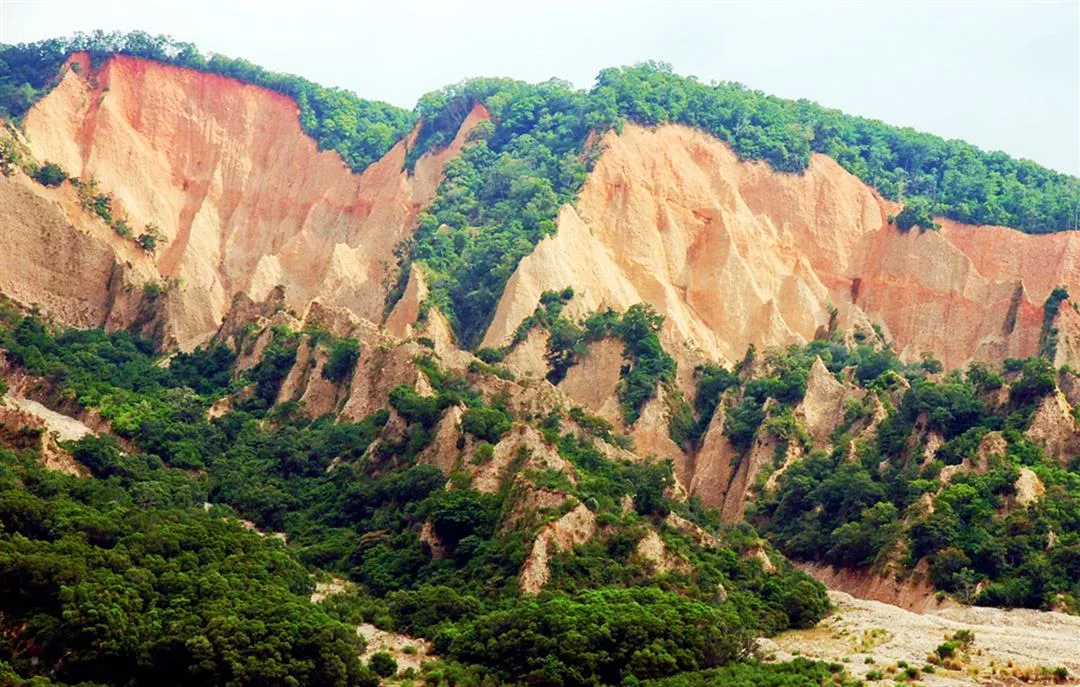
Top Ten Landscapes in Taiwan/source: Forestry Bureau_9. Huoyan Mountain Nature Reserve in Sanyi, Miaoli County (courtesy of the Forestry Bureau).

Top Ten Landscapes in Taiwan/source: Forestry Bureau_4. Jinguashi (photo by Zhuang Xinxian).


@List.jpg?w=522&h=410&mode=crop&format=webp&quality=80)


@List.jpg?w=522&h=410&mode=crop&format=webp&quality=80)