Unlocking Young People's Employment Potential
Lin Hsin-ching / photos Chuang Kung-ju / tr. by Scott Gregory
July 2008


Youth has always been a time when competition for employment is the most intense. Yet recently, young people are asking, "Why is this generation so unlucky? Jobs are harder to find and the competition is more fierce, but benefits are worse!"
According to statistics published in March by the Directorate-General of Budget, Accounting and Statistics (DGBAS), the unemployment rate for Taiwanese between the ages of 15 and 29 has reached 7.7%. That's twice the overall rate of 3.86%. Many students find themselves in the difficult position of being unable to find work after graduation.
The rate for those aged 30-39, however, is lower than the average, at 3.18%. This suggests that the high unemployment rate for those under 30 might be temporary, and that after a period of drifting, the majority will be able to get on track and find a position.
There is much to wonder about in such statistics. Is it really so hard for young people to find a job? Are their futures so uncertain? What is the way out for them? Not only are young Taiwanese working to better their own chances, the government and schools are also joining forces to lend them a hand.
A 26-year-old woman, Ms. Lu, quit her job at a labor recruitment agency late last year due to frustrations with conditions there. She never realized she'd have so much trouble finding another job. She's sent out 50 or 60 resumes over the last seven months to little response.
"I've been looking for a clerical position, but the few companies that have called me for interviews were mostly in direct marketing of beauty and health products. They seemed like fraudsters preying on ignorant jobseekers, and I turned them down," she says wryly.
A graduate of Yunlin's Transworld Institute of Technology who studied e-commerce, she estimates that the reason she can't find a suitable position is a lack of eye-catching strong points on her resume. On top of that, she says she is introverted and needs to work on her communication skills.
"I've already lowered my salary expectations to NT$20,000 a month. I just want to find a job as soon as I can. It's depressing just hanging out at home. Also, my dad has been on my case and it's really annoying," she says with frustration.
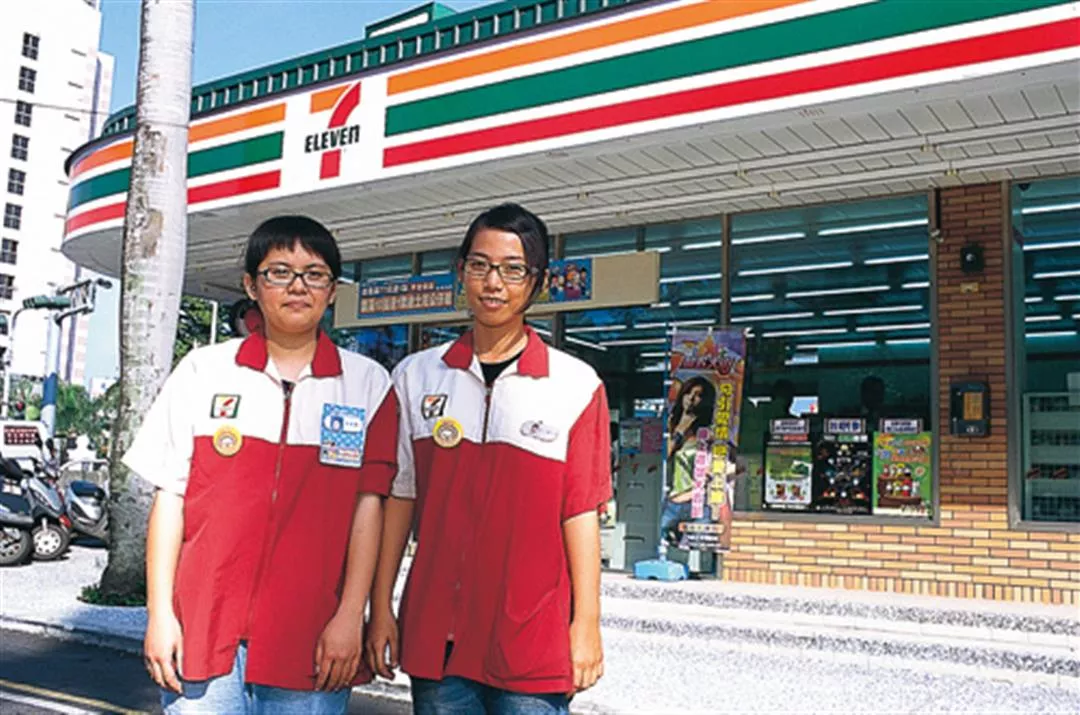
More and more businesses are unwilling to invest in hiring or training new employees, and are outsourcing work. Many inexperienced young people are turning to non-traditional employment such as temporary, contract, and part-time work.
Rising youth unemployment
Young people are of course new to the job market, but in Taiwan there are many like Ms. Lu who are completely without prospects. According to new statistics from the the DGBAS, the unemployment rate among 15-24-year-olds is 10.8%, around 2.8 times the overall rate. When the youth category is defined as those under 29, their unemployment rate is 7.7%. In all, there are 198,000 unemployed Taiwanese under 30. That is around a quarter of all unemployed people.
According to Shih Jian-chu, chief of the National Youth Commission's department that deals with employment issues, Taiwan's youth unemployment rate is not too high when compared with those of America and Europe. Statistics released by the international Organization for Economic Cooperation and Development in 2006 show that Japan's rate of unemployment for those between 15 and 24 was 8.0%, America's was 10.5%, Germany's was 13.5%, Belgium's was 18.9%, and France's and Italy's surpassed 20%.
"However, these European nations tend to have high overall unemployment rates, and they have largely been able to keep the youth unemployment rate below double the overall rate. Taiwan, on the other hand, is in a unique position, as youth unemployment is coming close to triple the overall rate. It shows that the labor market is seriously out of balance and that young people are unable to be effectively absorbed into the system. It's a waste of human resources, social capital, and economic resources," says Shih.
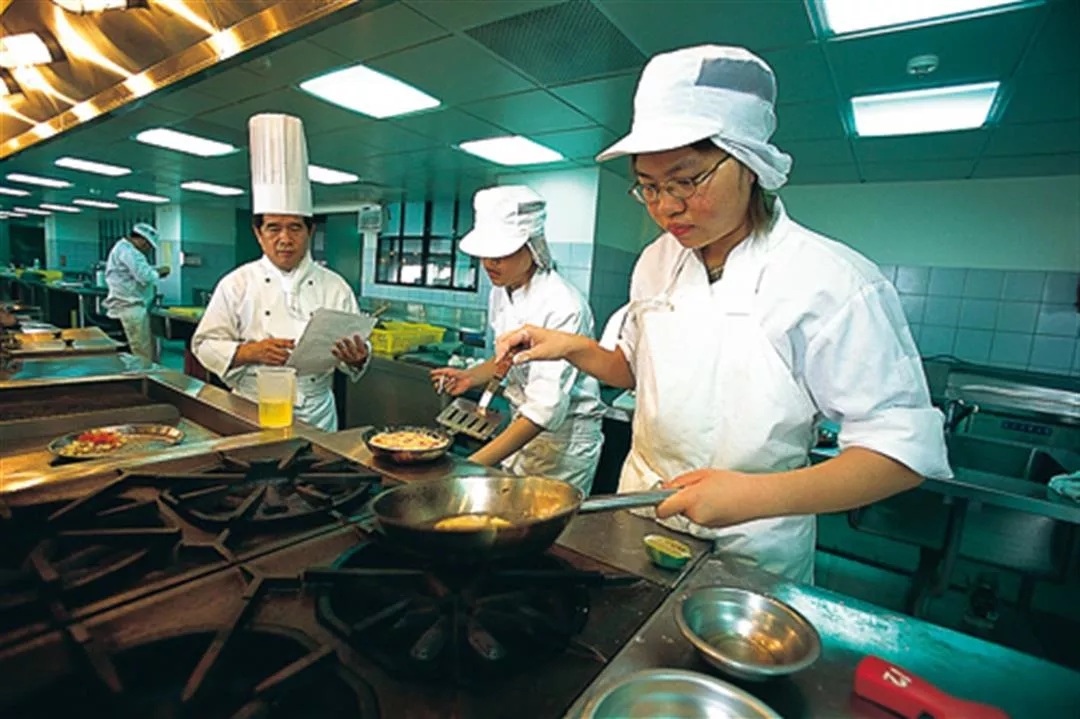
The boom in universities due to education reforms has delayed many young people's entry into the working world. But if vocational school graduates have mastered the skills of their chosen trade, they too can find a good job.
Education as preparation
A labor market where supply and demand are out of balance-this is acknowledged by industry, government, and education insiders as being the main reason for the high unemployment rates among Taiwanese youth in recent years.
Professor Lin Chu-chia of National Chengchi University's Department of Economics says that over the last ten years, the number of suitable positions has shrunk as traditional manufacturing and high-tech industry jobs have moved abroad. The industries that have stayed in Taiwan, such as services and finance, have stagnated due to an underperforming economy and weakening purchasing power-conditions that have hurt the overall employment market.
There is another side to the slackening of demand for labor. Education reforms begun in 1994 that called for the establishment of more high schools and colleges led to a large increase in the number of students obtaining bachelor's and even master's degrees. According to Ministry of Education statistics, more than 228,000 students graduated college in 2007, up 266% from ten years ago. More than 53,000 received master's degrees, up 376% from ten years ago.
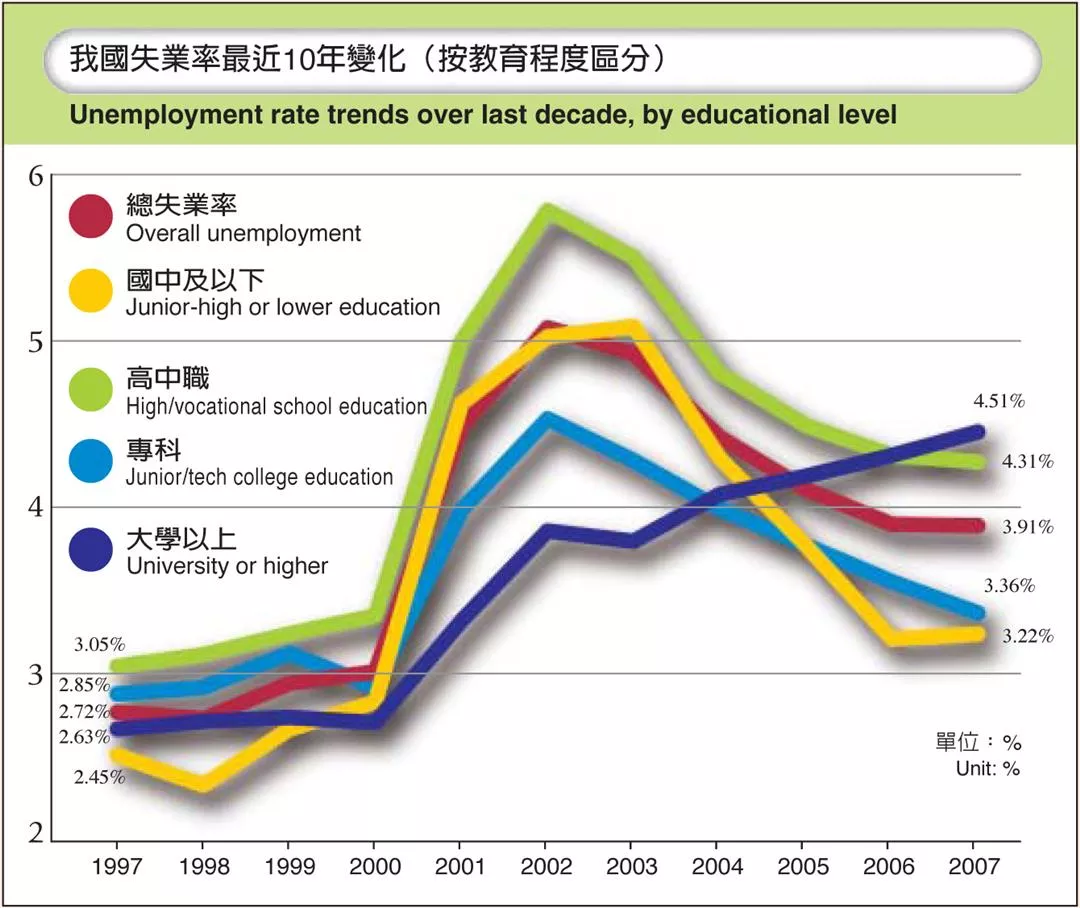
There is a ready supply of degree holders, and a higher education can no longer guarantee a job. The newest DGBAS numbers show that the unemployment rate for college degree holders in Taiwan is 4.51%, significantly higher than those for graduates of vocational school (3.36%), high school (4.31%), and junior high school (3.91%). College graduates are Taiwan's most unemployed group.
Kevin Zang, editor-in-chief of Career magazine, says that the number of higher education graduates exploded overnight after the education reforms, but job opportunities stayed the same. Graduates of top universities like National Taiwan University, National Cheng Kung University, National Tsing Hua University, and National Chiao Tung University, especially those who majored in science or engineering, are still able to find work straight out of school, but liberal arts, law, and business majors still face unprecedentedly tough competition even if they graduated from respected schools.
However, June 2007 statistics from the Council of Labor Affairs (CLA) show that while college graduates spend on average 1.8 months looking for their first jobs, master's degree holders only take 1.1 months. It would seem that the "high education, high unemployment" phenomenon is to some degree an illusion and that the true reason for this employment conundrum is the pickiness of young people toward employment.
Most worrying are those graduates of second-tier private universities. The level of education of these graduates is not low, yet they lack technical expertise. On the one hand, they are resistant to the idea of taking a lower position, like that of a technician, that would be suitable for a vocational school graduate. On the other hand, they cannot find "respectable" white-collar office jobs. They remain stuck in an employment no-man's land.
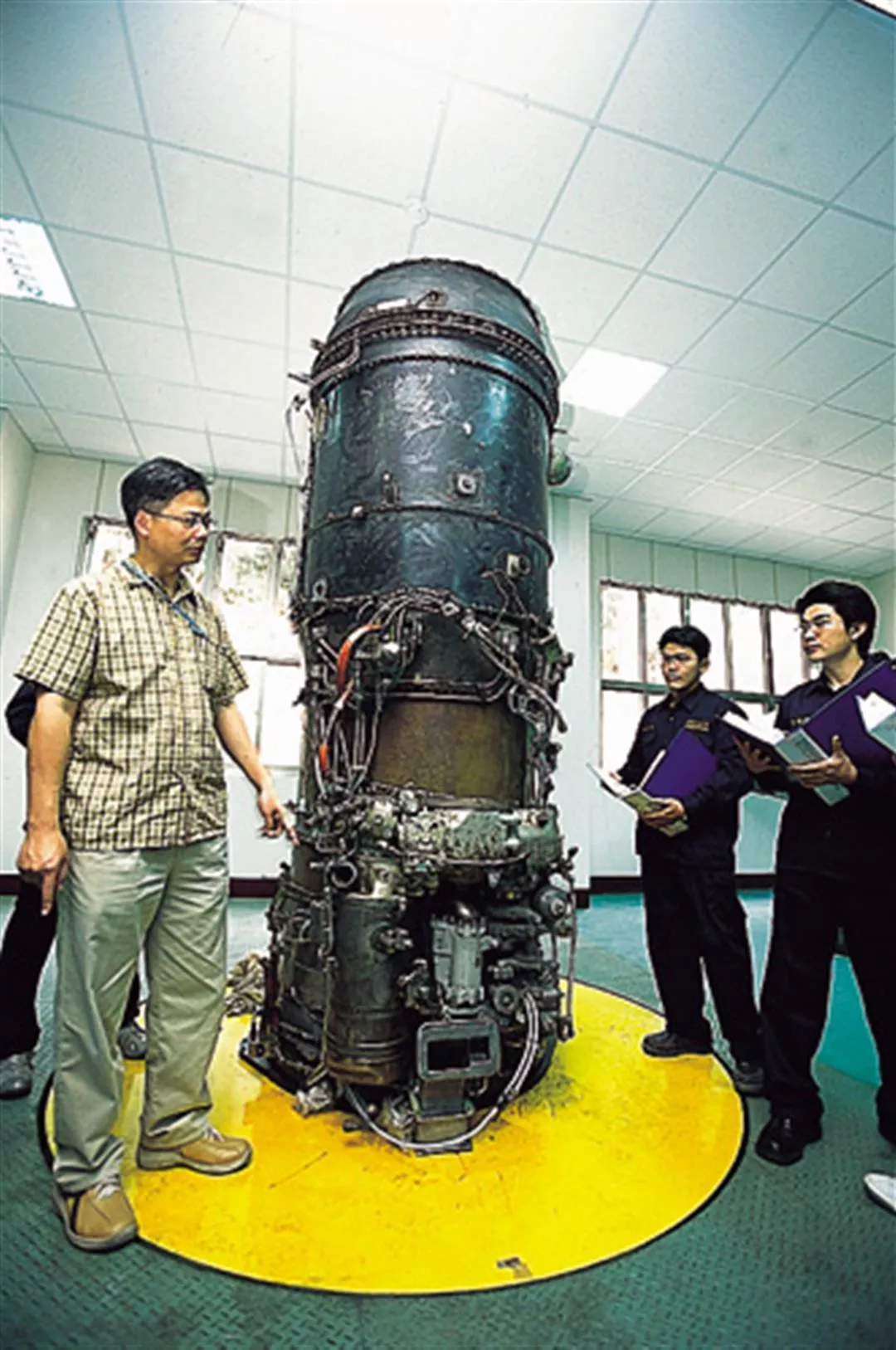
The boom in universities due to education reforms has delayed many young people's entry into the working world. But if vocational school graduates have mastered the skills of their chosen trade, they too can find a good job.
Non-traditional employment
College graduates have high expectations for their careers. Add to that the collapse of old expectations of employment for life, and more and more employers are no longer willing to invest the time and money in training new employees, or to treat them like family. Employers often outsource piecemeal, unspecialized work. They also hire employees on short-term contracts for specific assignments. With their thin resumes, young workers are the main ones to take on this sort of "non-traditional" employment.
According to National Youth Commission statistics, 30% of first-time jobseekers take temporary, short-term, or part-time work. More than half of them do "non-essential" entry-level work such as executive assistance or clerical services. There are few opportunities for advancement, and the average salary is lower than that of a traditional employee.
The Youth Labor Union 95, an organization that has long been concerned with non-traditional youth employment, also points out that many employers see such temporary workers as second-class, expendable employees to be dropped at will.
But the rise of non-traditional employment is a global phenomenon. Even in Japan, where lifetime employment was long the norm, 35% of the workforce is now of this category. The rise of this kind of employment originally rose up as a way around nations' labor protection laws. It was an easy way for employers to "take the back door" and cut costs. Funnily enough, it did not affect experienced employees with steady positions-rather, it turned first-time job seekers into sacrificial lambs and created inequality among generations.

Unemployment rate trends over last decade, by educational level
Start small
Not only is the number of full-time positions limited, salaries are low. That is another widespread impression concerning Taiwan's youth labor market.
A 2007 CLA survey showed the average starting salary for college graduates was NT$26,700, whereas in 1999 it was over NT$700 more at NT$27,462. Also, in recent years, as prices for oil and industrial raw materials have continued to soar, inflation has been on the rise. Everything but salaries is up, and young people can do nothing but sigh over their fate.
However, from another perspective, young people's salaries are low now but that doesn't mean they will always be low.
In 2006 the National Youth Commission surveyed the career progress of 12,000 vocational-school students who graduated in 2002. It found that over an average of 2.16 years of work experience, their total salary income (comprising basic salary, supplements, overtime pay and bonuses) rose from an average of NT$26-27,000 to an average of NT$35,400. Another survey by the Ministry of Education (MOE) showed monthly salaries rising an average of NT$2,630 per year in post. This means that as long as young people are willing to jump into a career and work hard, they are well rewarded by employers.
However, perhaps due to the influence of the media, it is still difficult to break the mental block concerning the "difficulty" of finding a job. More and more college students choose to run away from the job market and are unwilling to start looking after graduation. Some even say they are preparing to apply to graduate school or public service and put off graduating at all. The MOE statistics show more than 23,000 students who should have graduated in 2006 stayed in school-that's 17%. The "school-dependent" and "kids who refuse to grow up" are a growing problem for school administrations.
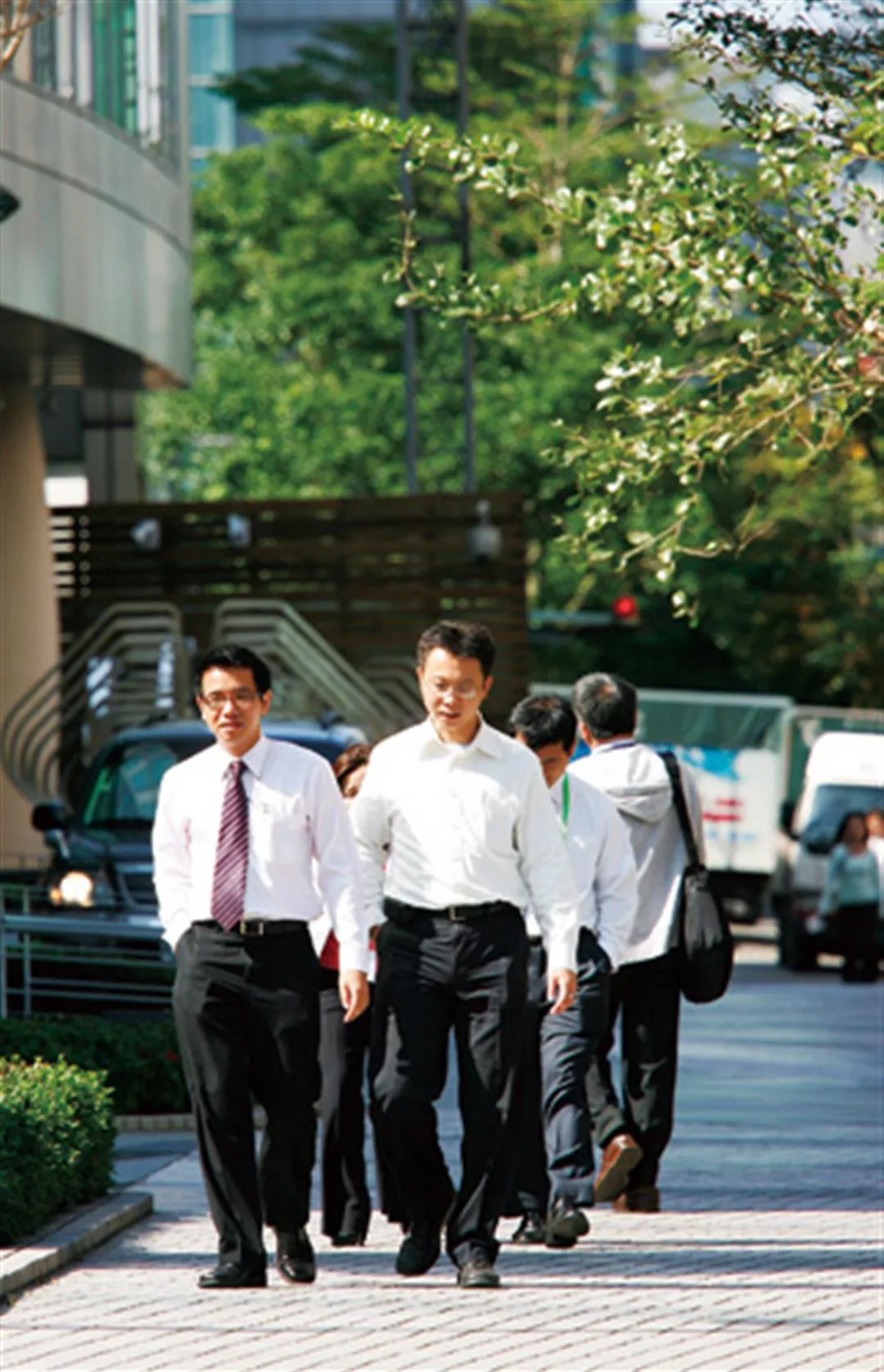
Showing superiors and co-workers proper respect, effective communication and the ability to work with a team are as important career assets as specialist skills.
Career-jumping
Another characteristic of youth employment is a high rate of career turnover.
According to a 2006 CLA survey of around 5,000 workers aged 15-29, 74% had changed careers and had held on average 2.7 different jobs. The chief reasons given were low wages and a lack of prospects for advancement.
People on the job market look to move upward, and it's great if they move on to a better opportunity. But to young workers with thin resumes, "firing the boss" might backfire. The same CLA survey showed that graduates' salaries tended to be around NT$1,400 lower for each time they'd changed jobs-they'd experienced for themselves the old adage, "A rolling stone gathers no moss."
Kevin Zang of Career also says that young people who frequently change jobs never advance past entry-level positions or get a chance to accumulate job skills. And, employers who see people disappear at the slightest hint of trouble might become less willing to train new employees. It's a loss for both sides.
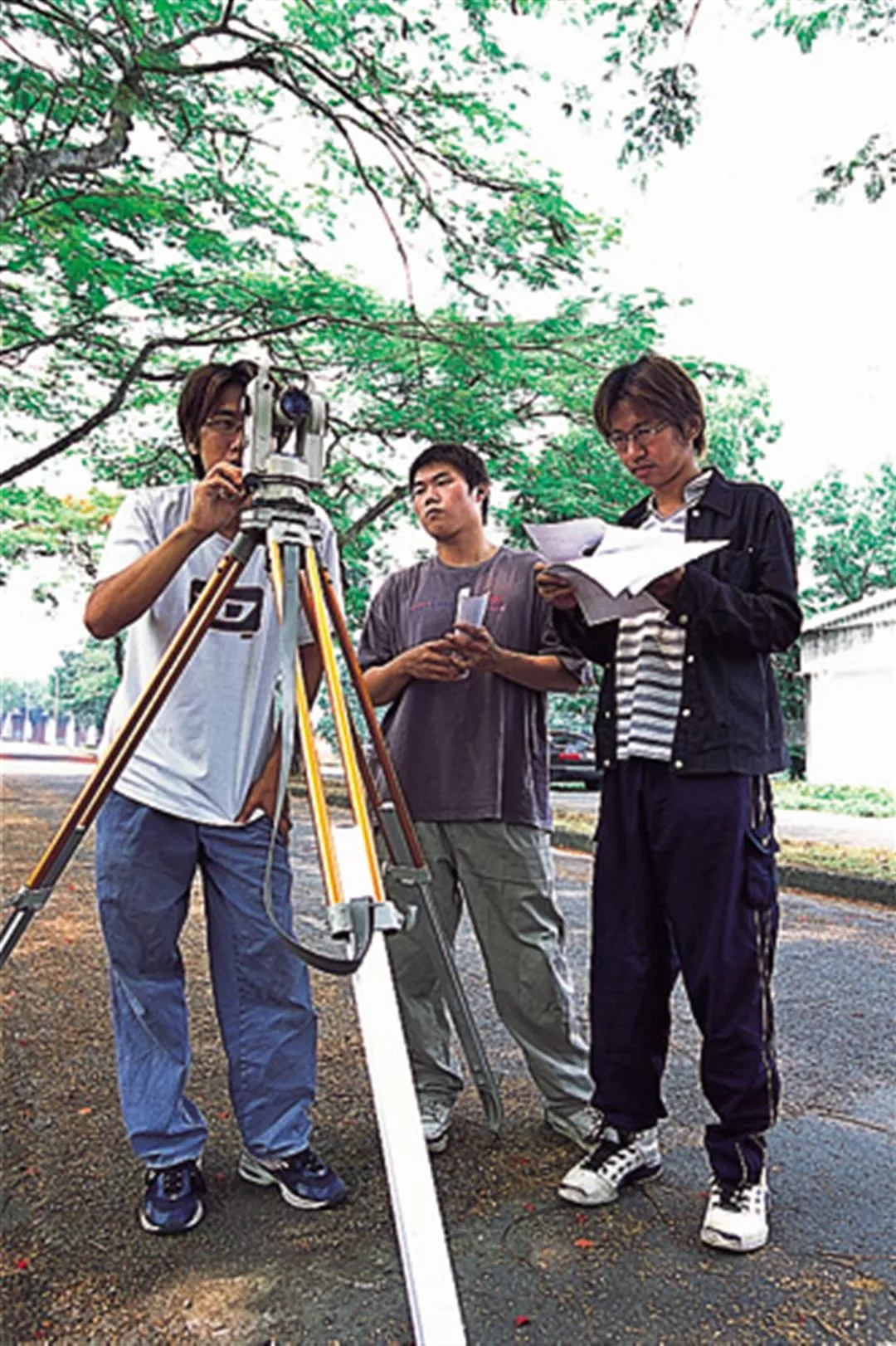
The boom in universities due to education reforms has delayed many young people's entry into the working world. But if vocational school graduates have mastered the skills of their chosen trade, they too can find a good job.
Tip 1: Gain marketable skills in school
In a job market with ups and downs, what should first-time jobseekers do?
"Gain marketable job skills while still in school"-that is currently the consensus of countries around the world. In 1998, ministers of education from France, Italy, the UK, and Germany issued the Sorbonne Joint Declaration, which made boosting the economic competitiveness of university students a top goal. In 1999, education ministers from 29 European nations signed the similar Bologna Declaration.
What does it mean to raise job skill levels? In a speech, former National Youth Commission head Cheng Li-chun pointed out that "job skills" doesn't have to mean traditional job training but could be the cultivation of a holistic attitude toward lifelong learning: if students are instilled while still in school with the abilities to find a job, hold on to it, and do it well, then they might be able to avoid that long and painful period of searching.
As for practical measures, European nations suggest that universities strive to teach "core employment skills" such as communication, problem-solving, critical thinking, and teamwork in their classes. They also stress that schools and employers should work together to give students chances to practice their skills in real work environments.
Additionally, to solve the problem of students not knowing what they want to do or what they are suited for, European nations encourage schools to set up "study case files" that record personality test results, official transcripts, self-reflections, and plans for future education and careers. Complete files could not only shorten the time students need to "find themselves," but also help employers in candidate searches.
The international trend has taken shape, and the National Youth Commission cooperated with National Chung Cheng University's Department of Labor Relations, Providence University's Department of Taiwanese Literature, Dayeh University's Department of Industrial Engineering and Technology Management, and Takming University of Science and Technology's Department of Marketing Management to attempt to raise the employable skills of their students. One important goal of their plan was the establishment of "professional course files" that students would start while still in school. If the project shows results, they plan to expand it.
Tip 2:First find a job, then get picky
Young people with no work experience facing the supercharged competition of the job market should make finding any job their first goal. Then they can look for a more ideal job.
Shih Jian-chu of the National Youth Commission suggests that with supply of human resources outstripping demand, first-time jobseekers should take an optimistic attitude of "this company is paying me to learn." As long as the working conditions are acceptable and you can learn on the job, you are in a better position for a raise, promotion, or change of career paths later on.
Even if the job is a temporary assignment through an agency that is taking advantage of legal loopholes, young people shouldn't be averse to setting their sights on longer-term goals and should use the opportunity at this entry level to benefit future job searches.
Daphne Huang, head of 1111 Job Bank's temp agency, says that most temporary contracts are currently for assignments of several months to one year in length-a period of time equivalent to employers' "trial periods" or "observation periods" for new employees in the past. Employees who do well during their initial contract period have something to look forward to: experience shows that 30% have their contracts extended or are offered regular employment.
The National Youth Commission's 2003 Youth Employment Experience Project also was designed to help young people take the first step.
The plan, which was subsidized by the government, had interested companies and non-profit organizations bring in people aged 18-29 with no work experience or who had trouble finding a job for internships of at least three months. After five years of operation, the program now has hundreds of companies of every kind participating and has assisted more than 12,000 young people. Of them, 60-70% were hired on as regular employees at the conclusion of their internships, and 20% used the experience to find new jobs elsewhere. That's a success rate of around 90%.
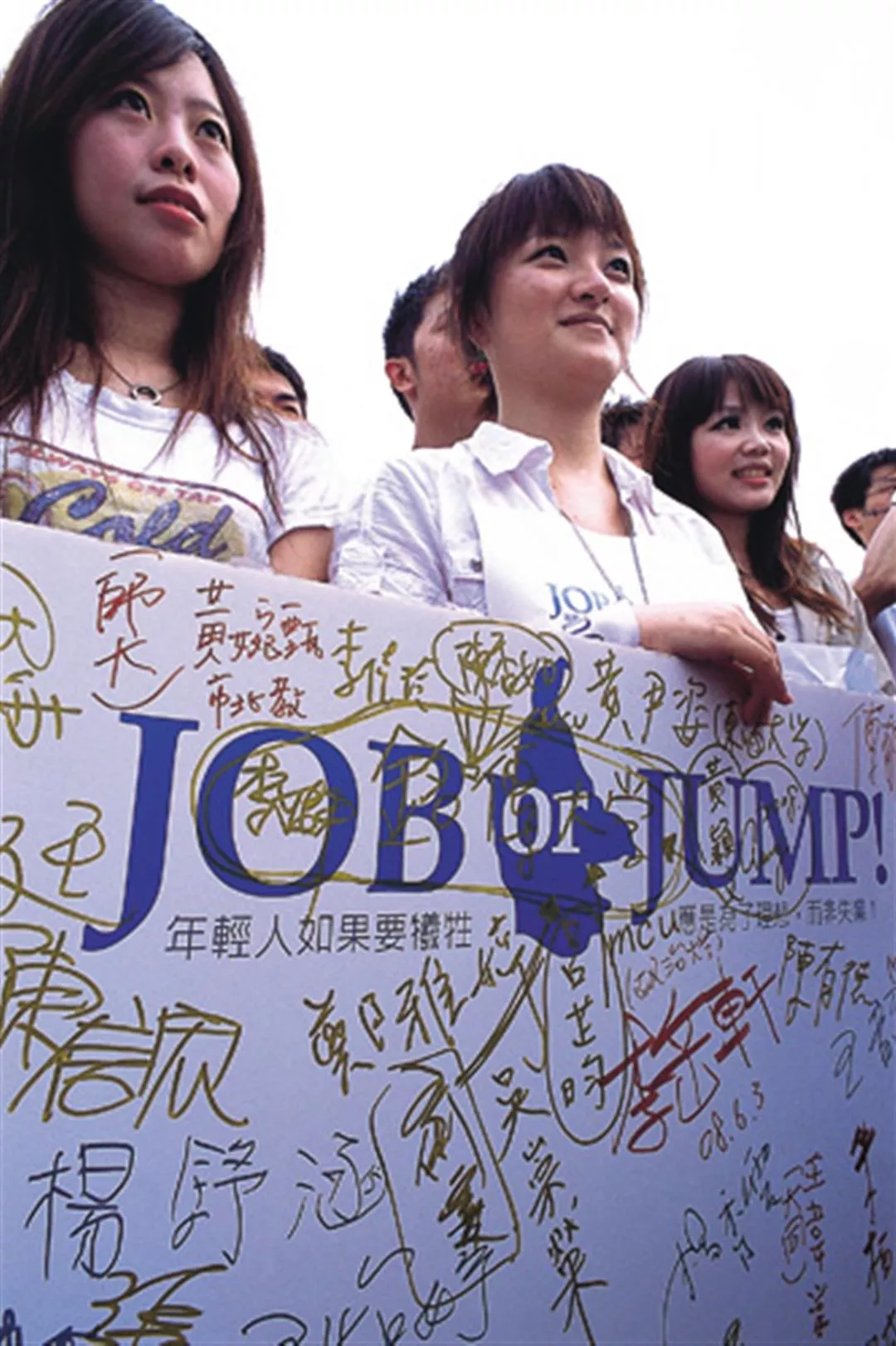
Student representatives from several universities protest near Tachih Bridge on the eve of Dragon-Boat Festival, calling attention to the problems new graduates have finding work and to suicides by the unemployed.
Tip 3:Change attitudes to jobseeking
Whether a government program or another short-term work opportunity, no job should be lightly disregarded by young people seeking employment. Once that crucial first step is made, the next challenge is to improve work skills and learn to network.
In the National Youth Commission's employment report, a focus group of employers discussed how this generation of youth are used to chatting with acquaintances through computer screens but don't know how to deal with their supervisors face to face, and lack a proper sense of respect for their elders. These factors lead to disharmony in the workplace and create a stressful environment. The employers also mentioned a lack of training in dealing with setbacks and taking on responsibilities as problems of the younger generation.
In response to these negative evaluations, Kevin Zang of Career implores young people to leave the casual speaking manner of the campus behind when entering the working world, "because not everyone goes for that."
He says that in addition to the importance placed on experience and expertise, there are other differences between the workplace and school: discipline, attitude toward customers, networking, and behavior toward superiors are all important. It's like when you're a student you can get by with passing grades, but when you're an employee, "There's a test every day, and the boss expects you to get a perfect score!"
He says, "Once students get a job, they have to lose the slacker mentality and take their superiors and co-workers as their teachers. Observe, listen, and don't be critical. Don't set your sights on the top while being afraid to get your hands dirty. Get into a learning mindset and accept the training that comes with each task. This is the best way to raise your competitiveness."
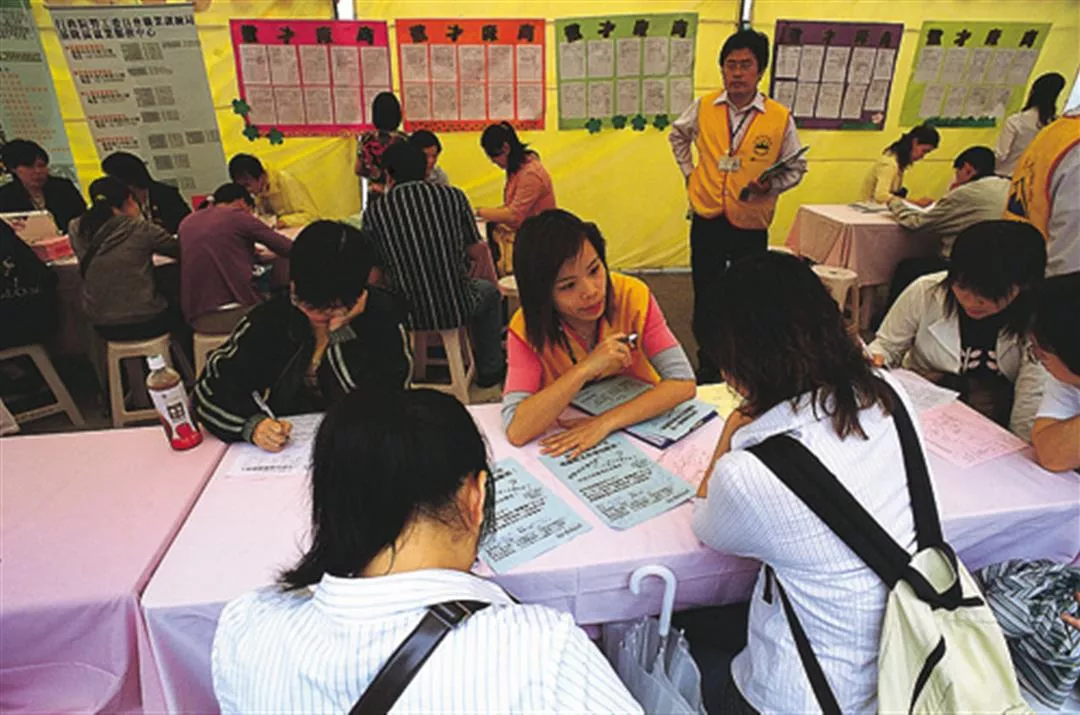
Young people should find their own interests and strengths early on, and take career aptitude tests. That way, they won't be lost when it comes time to choose a career. Pictured is a careers fair at a university.
A coming breakthrough?
After years of a stagnant economy and with a high youth unemployment rate, many have been hoping that the new administration that has just taken power will bring about change. Direct transportation links with China and the opening of Taiwan to tourists and investors from the mainland will certainly stimulate growth in local travel and service industries and bring about job opportunities. Additionally, new Chinese labor laws that make it more difficult to employ workers will mean many mainland-based Taiwanese businesses will return. Many experts are bravely predicting that, should Taiwan's economy begin to heat up again, a steady decrease in youth unemployment will follow.
However, even if the youth labor market sees a breakthrough, government agencies should continue to assist young people in preparing for their careers. By raising employable skill levels, stimulating entrepreneurship, promoting equal opportunity employment for youth, and creating more opportunities, they can help young jobseekers meet the challenges of the future.
And if young people are able to plan ahead, work hard, and not give up in the face of short-term setbacks, they will accumulate experience and their dreams of finding the perfect job will come true.
2006 international youth unemployment rates in Taiwan and OECD countries
| Country | Unemployment among 15-24 year-olds(%) | Overall unemployment (%) | Youth unemployment as a multiple of overall unemployment |
| France | 23.9 | 9.4 | 2.54 |
| Italy | 21.6 | 6.8 | 3.18 |
| Belgium | 18.9 | 8.2 | 2.30 |
| UK | 13.9 | 5.3 | 2.62 |
| Germany | 13.5 | 8.4 | 1.61 |
| Taiwan | 10.8 | 3.86 | 2.80 |
| USA | 10.5 | 4.6 | 2.28 |
| Australia | 10.4 | 4.9 | 2.12 |
| South Korea | 10.1 | 3.5 | 2.86 |
| Japan | 8.0 | 4.1 | 1.95 |


@List.jpg?w=522&h=410&mode=crop&format=webp&quality=80)