An Invisible Bridge:Malaysian Students in Taiwan
Coral Lee / photos Chuang Kung-ju / tr. by Christopher J. Findler
May 2005


Studying in Taiwan, a phenom-enon particular to the Chinese of Southeast Asia, started in the 1950s. In order to contain the spread of communism, the United States provided financial aid to encourage ethnic Chinese to study in "Free China." Taiwan's later education policies served to further draw overseas Chinese. Over the past half century, over 80,000 Malaysian Chinese have pursued their studies in Taiwan, and because of their solid basis in Mandarin they have been the largest group over the years.
What experiences do these visitors from the Malay Peninsula have while in Taiwan? How do they fare in their various career fields upon their return to Malaysia? How have they built a bridge between Taiwan and Malaysia? Theirs may not be a tale of peril and adventure, but it still has much to offer.
Kuala Lumpur's renowned Petaling Street is a must-see for tourists. Engulfed in the hubbub of the heaving, spreading market archway are all kinds of Chinese teashops and restaurants. Set off in an alley, Mentor Bookstore sits tranquilly amid the clamor. It is filled with CommonWealth Magazine's newest books, posters for a Charles Kao speech, and all sorts of books from Taiwan and mainland China, including literature, sociology, and business management. The ubiquitous classical music exudes a simple refinement that you just cannot find in the chaos of Chinatown's traditional bookshops.
Proprietor H. H. Poh once ran a business consultancy. Driven by what he saw as a lack of reading within the Chinese community, he opened up this small but exquisite bookshop eight years ago. The publishing company he set up two years ago has printed 200-plus homegrown Chinese-language works. He hopes to bring all Chinese closer to Malaysia through Chinese-language materials oriented around Malaysian society.
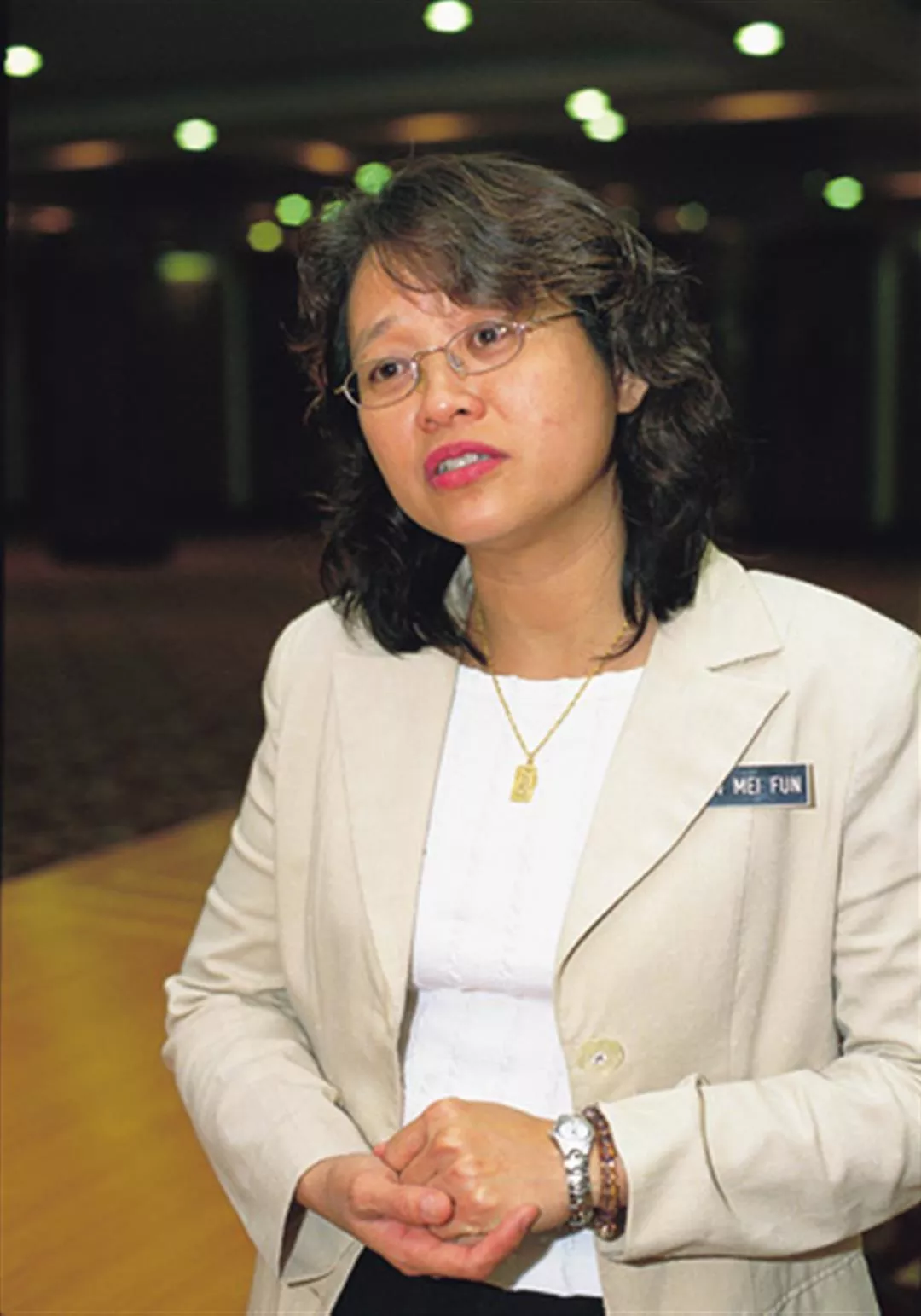
Chew Mei-fun, an up-and-coming star on Malaysia's Chinese political scene, graduated from NCCU's Department of Chinese Literature. She explains that the experience of studying in Taiwan motivated her to think about such things as academics, society, and culture.
Treasure hunting in Taiwan
Always candid, Poh quips, "I often say Taiwan is a treasure island with all kinds of treasures waiting to be dug up." Throughout his career, Poh has worked closely with Taiwan. In the early days, he worked in business education and training, collaborating with the Chinese Productivity Center to bring Taiwanese lecturers to Malaysia to give classes. Later, after opening his own bookshop and publishing house, he invited such giants from Taiwan's publishing world as Hao Ming-yi and Jan Hung-chih to "enlighten" Malaysia's Chinese.
Referred to by friends as "the King of Ideas," Poh studied in Taiwan in the 1980s, graduating from National Chengchi University's Department of Business Management. He explains that he received a Chinese education and that as a youth, he was shaped by Chinese culture. He later went to university in Taiwan where he saw firsthand Taiwan's economy and society transform and develop. He believes Malaysia will take a similar path, so he feels it is only natural to hold up Taiwan as a mirror.
A trip over the ocean takes us to Sarawak. Lau Nai-hoh, president of the Sarawak Taiwan Graduates' Association (STGA), just returned to Malaysia from Taiwan at the end of March. He heads a well-known shipyard in Sibu, East Malaysia's second-largest city. He led a group of 32 shipbuilders on a trip to Taiwan where they visited several ship and yacht builders in southern Taiwan. They also discussed training programs with academic institutions such as National Taiwan University (NTU), National Chengchi University (NCCU) and National Kaohsiung Marine University, for the purpose of enhancing shipbuilding technology in Malaysia.
Lau points out that during this productive trip, a few universities expressed interest in Sarawak's request, saying that they could set up short-term summer courses, send instructors to Sarawak to provide training, and even offer courses along the same lines as the two-year vocational training courses for young people provided by the Overseas Chinese Affairs Commission. These projects received nods of approval from the Ministry of Education and the OCAC. Shipbuilders from both countries also suggested mutual cooperation.
Lau was in the first class to study in Taiwan's youth vocational training course. Courses are offered in universities, colleges, and vocational schools and aim to teach practical skills and production technology in industry, agriculture, and business to young overseas Chinese. Initially, 200-300 students were accepted into the programs per year, but that number has increased to 500-600 in recent years.
Lau graduated from National Taoyuan Agricultural and Industrial Vocational High School in the 1970s and returned to Malaysia to put what he had learned into practice. He started by raising pigs and rice, only to have his livelihood devastated in a flood. This convinced him to change careers. As fortune would have it, the focus of Sibu's shipbuilding industry had been gradually shifting from building small fishing boats and cargo ships to building large oceangoing vessels to order. Lau started off in ship hardware, but it was a Singaporean ship's master who truly ushered in his career in shipbuilding. He started in refurbishing and worked his way up to oil platform supply ships. Over the past 30 years he has had his share of setbacks, but today his Tuong Aik Shipyard boasts over 300 employees and annual production of MR70-80 million (about NT$600 million). Now that his business is running smoothly, Lau can invest more energy in the STGA.
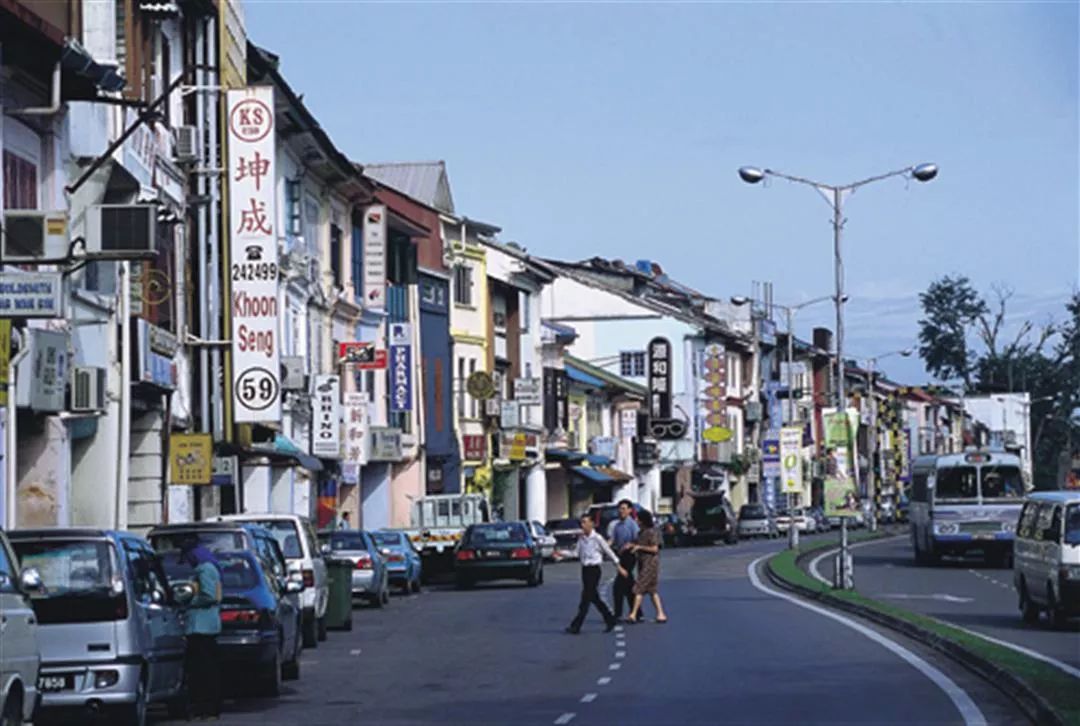
Malaysian-Chinese graduates from Taiwanese universities living in East Malaysia set up alumni associations, because of the discrimination they encountered years ago. Their great achievements as a result of 20 years of working together are now much admired by Malaysia's Chinese community. This photo shows a street in Sarawak's capital Kuching.
Huge Taiwan alumni organization
According figures from the Federation of Alumni Associations of Taiwan Universities of Malaysia (FAATUM), since the 1950s some 30,000 Malaysians have studied in Taiwan and returned home to work in various fields and professions. Each of Malaysia's 13 states and all its major cities have Taiwan alumni associations which fight for members' rights and work alongside other Chinese civic organizations to develop Malaysia's Chinese community.
FAATUM is an umbrella organization for university alumni associations with 39 branches in 13 states and 12 universities. FAATUM's president Law Yang-ket explains that with the exception of medicine and pharmacology, degrees from Taiwanese universities are not recognized by the Malaysian government. After two or three decades of hard work, however, Malaysia has seen many alumni from Taiwan universities make their mark in their fields
It hasn't always been so. Huang Wei-wen of Tamkang University's Graduate Institute of Southeast Asian Studies, who has made a study of the STGA, notes that in the early days, students returning from Taiwan had very difficult lives. It wasn't until the 1980s that they started to make an impression in Malaysia's Chinese community.
Huang states that relations between the KMT and the communists in China were tense throughout the 1950s and 60s, and the cross-strait warfare deeply impacted the lives of Chinese living overseas. In 1950, the PRC established diplomatic relations with Britain, Malaysia's colonial ruler. A wave of "New China Socialism" swept across Southeast Asia for a time and left-wing thinking became the mainstream in Chinese communities. In 1956, Singapore rubber tycoon Tan Lark-sye founded Nanyang University (Nantah) which was strongly dedicated to Chinese education. The leftist tendencies of Nantah eclipsed the right-wing bent of Taiwan returnees.
At the time, Malaysia's Chinese community was universally biased against students returning from Taiwan. Although studies in Taiwan were inexpensive, people doubted that degrees from schools on this tiny, impoverished, academically insignificant island would be worth the paper they were printed on. The majority of students who studied there came from families that supported the KMT or had some kind of kinship with Taiwan.
Self-reliant
Returning home after tearing themselves away from their native land and applying themselves to their studies in Taiwan, they were faced with unfair treatment of all kinds. Despite similar education levels, those who pursued studies in Taiwan were usually paid less and given lower positions. Attached to their Chinese roots, these aliens were not only unpopular among mainstream Malaysian society, they were even snubbed by companies doing business with mainland China. As a result, the only choice left to them was teaching in Malaysia's Chinese schools. "Discrimination caused us to stick together," says Wong Seng-kwong, former chief editor of the Malaysia Daily News, describing the background that spawned the STGA in the 1960s.
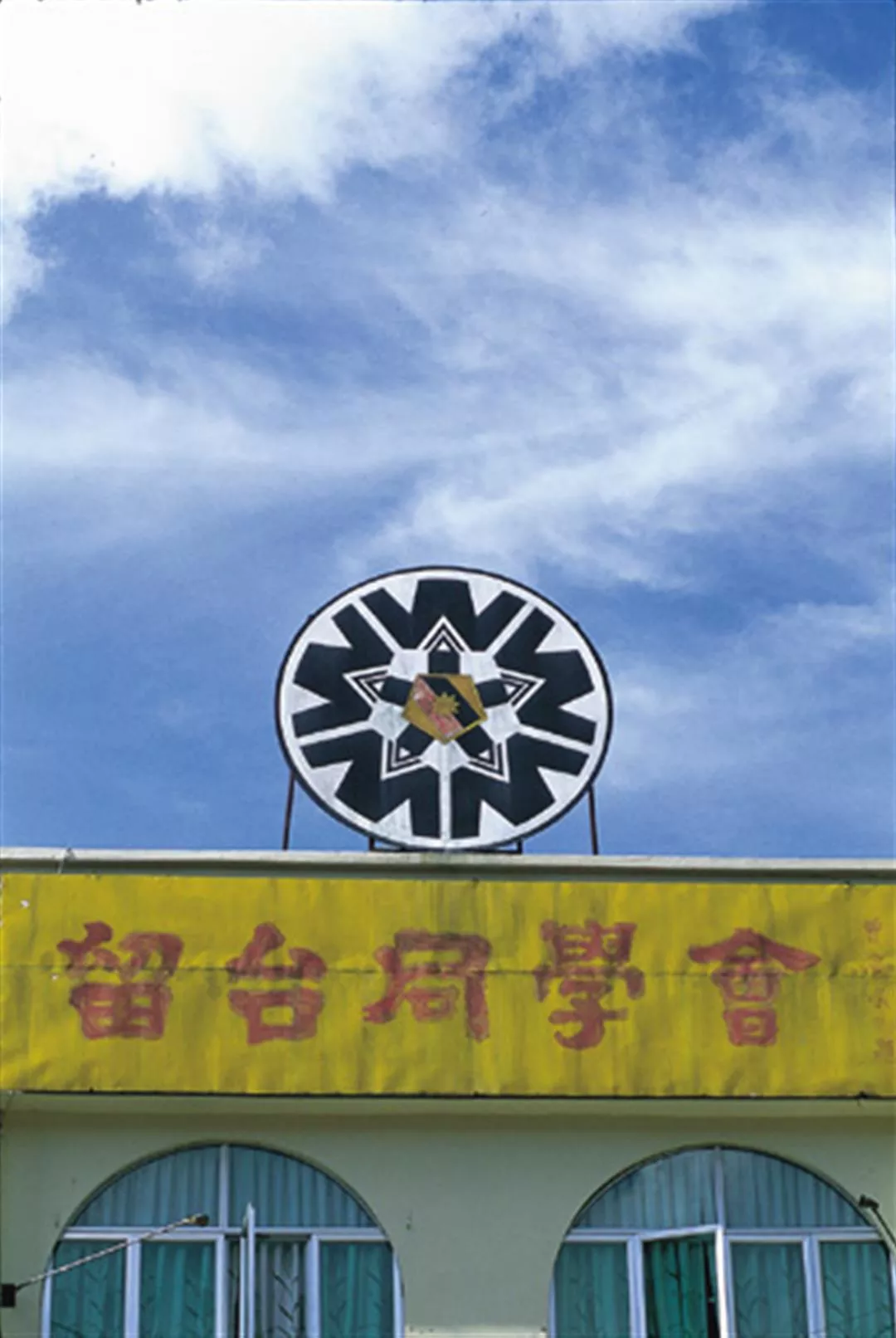
From the outset, the STGA's principles have been sincerity, unity, and self-reliance, and according to Huang Wei-wen the association has lived up to them. To combine their strengths and work together harmoniously, the directorship and Chinese Culture Night, the association's major annual event, rotate among affiliates in five cities. Since Taiwan graduates hail from different majors, schools, and occupations, this system ensures directors with diverse backgrounds. The STGA differs a great deal from other traditional Southeast Asian Chinese associations in that the latter emphasize connections more. This is also why the STGA encounters very little internal conflict or disagreement and benefits from the wisdom and efforts of each member.
Political tensions between Taiwan and mainland China in those days had less impact in West Malaysia than in East Malaysia, but Taiwan graduates were still discriminated against there.
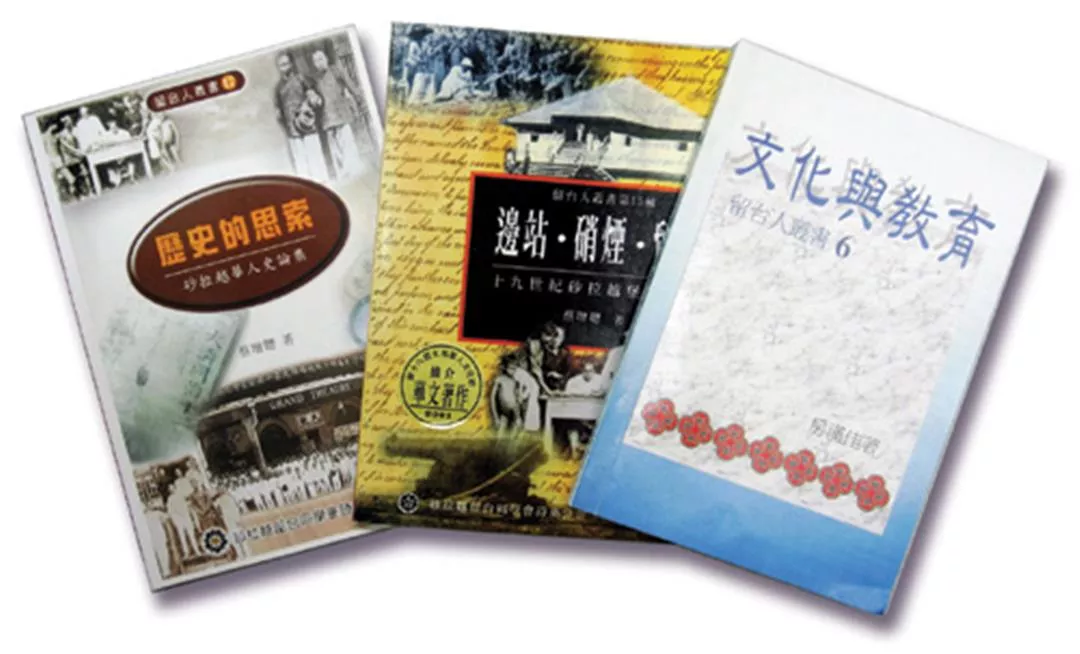
East Malaysia's Sarawak Taiwan Graduates' Association has endeavored to promote cultural education, publishing a number of books on history and literature. The solidarity of graduates of Taiwan universities can be seen in the fact that over 1000 attend Chinese Culture Night annually.
Out of the darkest valley
Ng Teck-fong, who graduated from the Chemistry Department of National Cheng Kung University in Tainan in 1964 and was formerly president of the top-tier Malaysian Chinese organization, the Federation of Chinese Associations Malaysia, points out that at that time better-off families sent their children to Nanyang University in Singapore, whereas those students who came to Taiwan were generally from more humble backgrounds. The average education level was low within the Malaysian Chinese community, and the habit of judging people by their wealth deep-rooted. Furthermore, Chinese-owned companies generally believed that high-school graduates were capable of doing the work, and hiring college graduates would be overkill. Many Taiwan graduates had a hard time surviving back in Malaysia, but they refused to throw in the towel. They established their own businesses and made impressive achievements. They managed to "turn lemons into lemonade."
According to Ng Teck-fong, the businesses of Taiwan graduates started to take off around 1980, as did some Malaysian industries. The country was excited about following in the steps of Asia's four tigers-one of which was Taiwan. As a result, Taiwan graduates were given more opportunities to apply their talents. What's more, mainland China continued to shut itself off from the outside world and to alienate and oppress overseas Chinese groups. Consequently, Malaysia's Chinese community finally started to reevaluate its views on Taiwan graduates. A college degree from Taiwan became a requirement when recruiting people for many factories and projects. Meanwhile, political turmoil in Singapore forced Nanyang University to shut down, resulting in more people pursuing education in Taiwan.
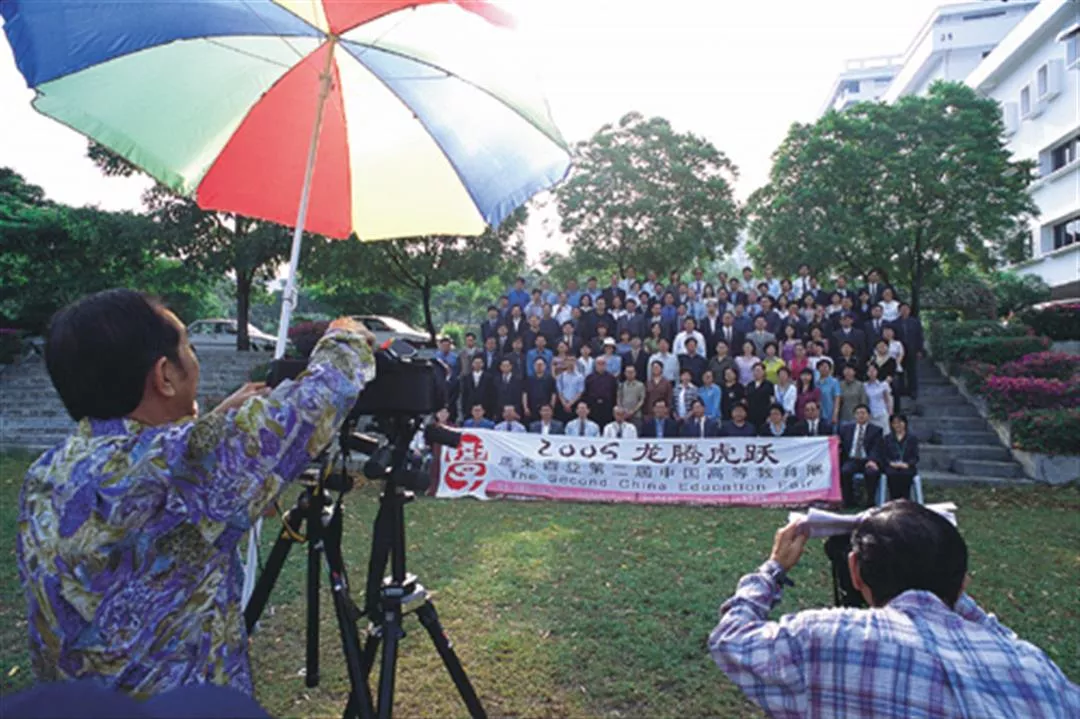
In recent years, mainland China has been actively recruiting overseas Chinese students. With its 2nd Chinese Post-Secondary Education Fair touring Malaysia this spring, cross-strait antagonism has spread overseas.
Complementing each other
In the late 1970s, then-FAATUM president Ng Teck-fong dispatched the first economic and trade delegation to Taiwan. The group included high-ranking officials such as Rafidah Aziz, the minister of international trade and industry and first minister of Sabah. Taiwan was still very ignorant of Malaysia. Ng jokes, "They thought we lived in trees." Many people in Taiwan still thought of Malaysia as anti-Chinese. After this ice-breaking visit, the delegation persuaded Taiwanese businesses to invest in Malaysia, opening the gate for trade between the two nations.
In the 80s, the Malaysian government initiated many investment-friendly policies. Taiwanese businesses were drawn to Malaysia, but found themselves totally unfamiliar with the new environment. Because recruiting people from Taiwan to work in Malaysia was not cost effective, Taiwanese businesses started hiring Taiwan graduates in their overseas companies. Malaysia's graduates from Taiwan universities finally had their chance.
In contrast to the sudden but late rise of Taiwan graduates in business and industry, the influence of Taiwan graduates in education and culture in Malaysia started earlier and was even more profound.
As 90% of those that studied in Taiwan had graduated from independent Chinese middle schools, they were molded by Chinese culture and proficient in the language. Before Taiwan degrees were recognized by the Malaysian government, teaching in an independent middle school became the primary choice of Taiwan graduates. This tradition continues today.
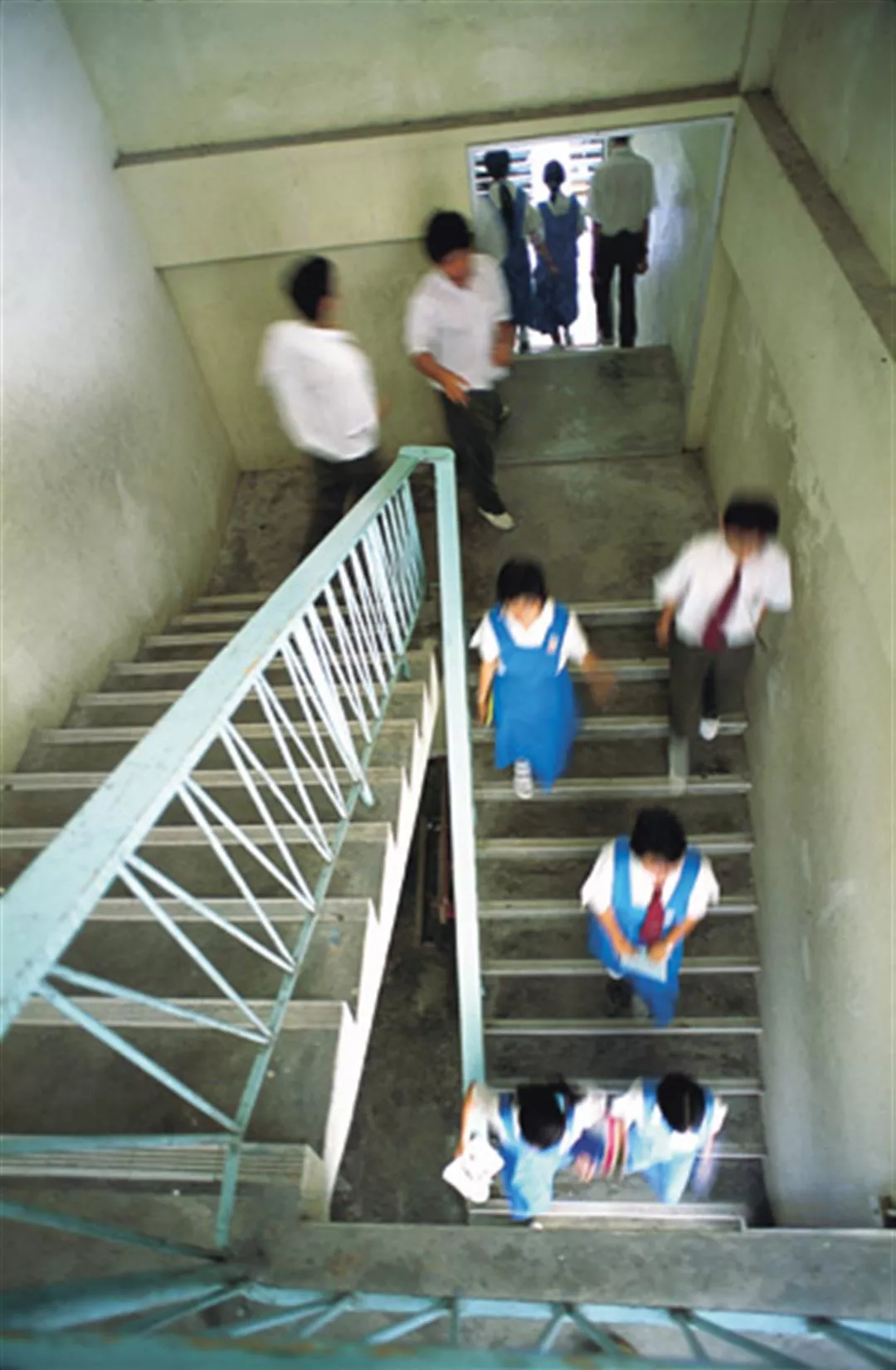
How this tale of Taiwan and Malaysia unfolds will be decided by these, the tens of thousands of young people in Malaysia's Chinese-language primary and secondary schools, when they choose where they will continue their educations-Taiwan or China.
Shoring up the bridge of education
According to a 2003 survey, more than half the 2000 teachers in Malaysia's 60 independent Chinese middle schools are Taiwan graduates. A schoolmaster from a well-known independent comments, "The turnover rate among Taiwan graduates is lower. They are more devoted and are the pillars of the school. Graduates from European, American, or local schools are motivated more by money."
According to Law Yang-ket, Taiwan graduates' contribution in promoting art education in Malaysia is much appreciated. Chen Hui-chong, for example, was a student of Taiwanese music master Shih Wei-liang and graduated from the music department at National Taiwan Normal University. From promoting choruses and orchestras in schools to establishing the Johor Conservatory of Music and Art, Chen has been cultivating art in Malaysia since his return 30 years ago. His masterpiece 24 Jieqi Drums is taught in many elementary and high schools and is frequently performed at large gatherings.
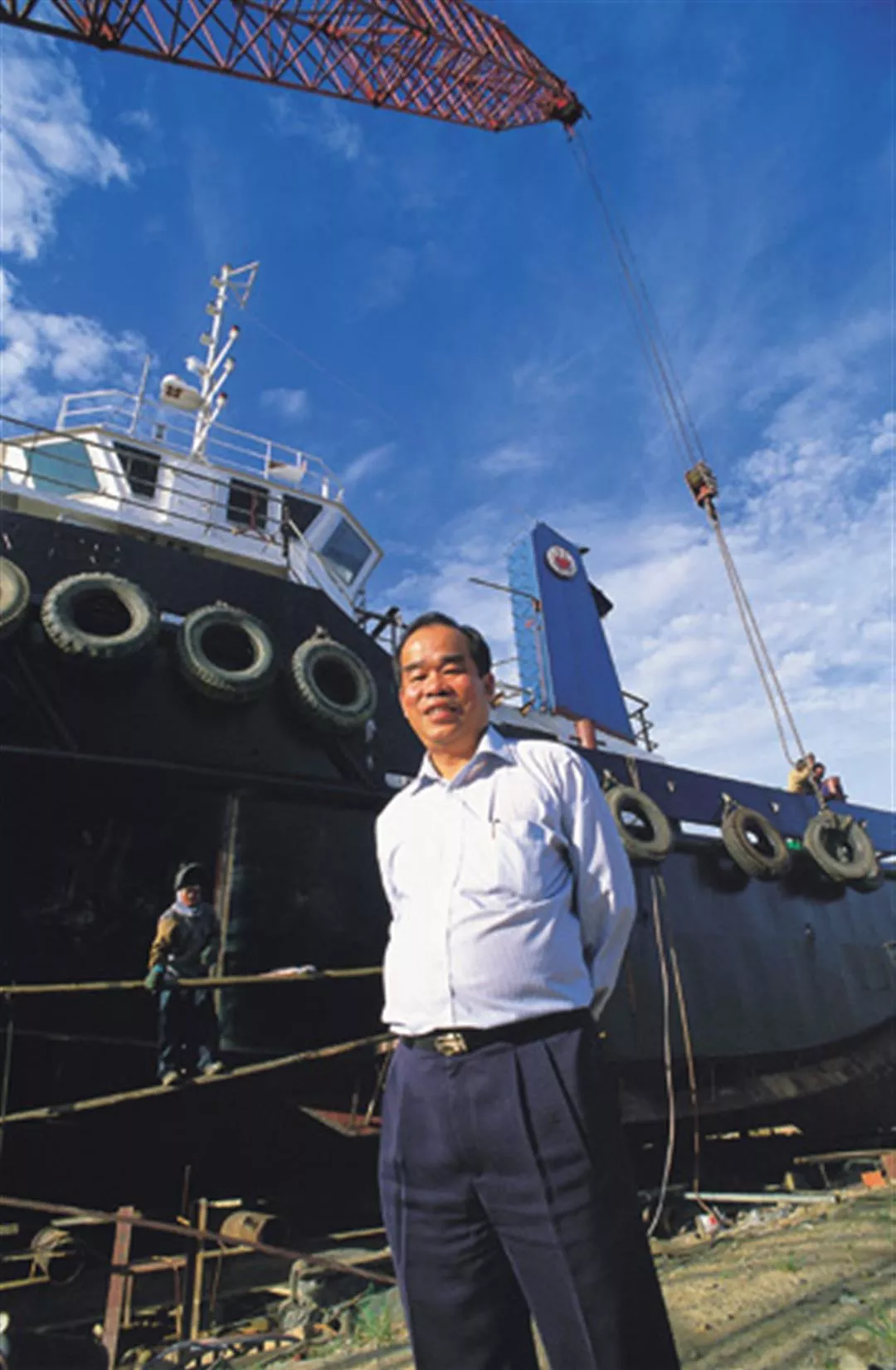
Lau Nai-hoh, who studied in Taiwan during the 1960s, established his shipbuilding empire in Sibu, Sarawak's second largest city. When not busy with work, he shuttles between East Malaysia and Taiwan as he builds up a bridge of culture and technology between the two nations.
China or Taiwan?
"The diversity of ideas in Taiwan has been nothing but inspiring to me," says Diong Chi-tzuoh, PR and student affairs director of the Chinese-language New Era College of Malaysia. A graduate of NTU's Agricultural Chemistry Department, Diong first came to Taiwan in 1988 following the lifting of martial law. He witnessed Taiwan waking up to its own identity as its people sought democracy and human rights. This stirred within him a special concern for democracy and human rights upon his return to Malaysia.
He says Taiwanese society appears frenzied on the surface, but is actually spunky and creative. By contrast, Malaysia is much more stifled. Diong points out that Taiwanese can discuss whether or not they should declare independence. In Malaysia, such issues are repressed, and dissidence is not permitted.
Toward the late 1990s, the trend of studying in Taiwan entered another phase. China, pursuing its "reform and opening" policy, announced a series of preferential treatments aimed at winning over overseas Chinese communities and students. Young people were casting aside the burdens of cultural tradition and were drawn to the economic force of a swiftly emerging China. Taiwan, on the other hand, was reducing its education budgets for overseas Chinese and cutting back on subsidies and student places for them in national universities. This all worked together to dull the allure of Taiwan to prospective students.
Despite the changing study environment, OCAC statistics show that except for a sharp drop in 1998 due to the Asian financial crisis, Malaysian students' enrollment in Taiwanese universities and the National University Preparatory School for Overseas Chinese Students combined has remained at around 1000 throughout the past decade. China has been holding education fairs in Malaysia these past two years, but student numbers in Taiwan are not expected to drop in the short term. Many Malaysians who have studied in Taiwan point out that Taiwan still has several advantages over China. These include scholarships, part-time jobs, and most of all an environment and atmosphere that only a free, open, and prosperous nation can offer. The older students are calling on the Taiwan government to use these plusses to its advantage.
Malaysia's Chinese-language education has produced young elites whom fortune has brought to Taiwan to receive their educations. After returning to Malaysia, they have worked to build two-way bridges of interaction and benefit between Malaysia and Taiwan. Will the tale continue? Or is it a thing of the past? These questions should not only be of concern to Malaysia's Chinese students. They should concern Taiwan society as well.
Malaysia at a Glance Area:
330,000 square kilometers, roughly ten times the size of Taiwan
Population: 26 million total-65% Malay (including the indigenous Orang Asli), 25% Chinese, 10% Indian Languages: Malay is the official language, while English is the primary language of business Religion: Islam is the official religion, with over 60% of the population Muslim. Other religions practiced include Buddhism, Hinduism, and Catholicism. Exchange rate: 1 Malaysian ringgit is approximately 8.5 New Taiwan dollars


@List.jpg?w=522&h=410&mode=crop&format=webp&quality=80)